5 Creative Ways to Incorporate Exercise into Your Daily Life in 2026
Introduction
Incorporating exercise into your daily life in 2026 involves gamifying workouts, leveraging smart technology, adding movement to routine tasks, engaging in family fitness activities, and embracing micro-workouts. These five creative strategies help busy individuals maintain an active lifestyle without requiring extensive time commitments or gym memberships. By integrating physical activity seamlessly into existing routines, you can enhance both physical and mental well-being while adapting to modern wellness trends.
In 2026, with the world increasingly focused on health and wellness, finding innovative ways to stay active has never been more essential. Whether you’re busy with work, family, or other commitments, these approaches can transform your relationship with fitness and make exercise a natural part of your day.
1. Gamify Your Workouts
Turning exercise into a game through fitness apps, challenges, and reward systems makes workouts more enjoyable and significantly increases adherence to fitness goals. Gaming elements create motivation through competition, achievement tracking, and social engagement. This approach transforms mundane exercise routines into engaging experiences that you’ll actually look forward to completing.
Turn Exercise into a Game
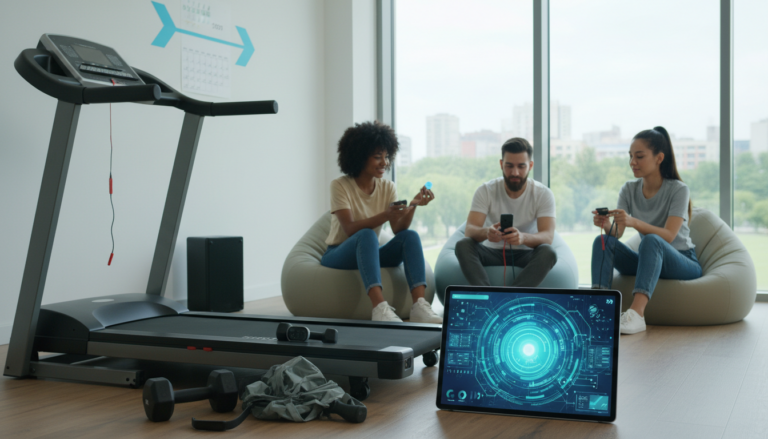
Incorporating elements of gaming can make workouts more enjoyable and engaging. Using fitness apps that reward you for completing challenges or reaching milestones can turn mundane exercise into a fun competition.
– Fitness Challenges: Join virtual fitness challenges with friends or family members. Many apps allow you to compete in step counts or workout routines, creating a sense of community and motivation.
– Reward Systems: Set up a reward system for yourself. For instance, if you hit your weekly exercise goals, treat yourself to something special, whether it’s a new workout outfit or a healthy treat.
What Makes Gamified Workouts More Effective Than Traditional Exercise?
Gamified workouts tap into psychological reward systems by providing immediate feedback, achievement badges, and social competition. Research shows that gamification increases exercise consistency by 30-40% compared to traditional workout routines, making fitness feel less like a chore and more like an entertaining challenge.
2. Utilize Smart Technology
Wearable devices and fitness apps have revolutionized daily activity tracking in 2026, making it effortless to monitor progress and receive personalized workout guidance. These technologies provide real-time feedback, automated reminders, and data-driven insights that help optimize your fitness routine. Smart technology eliminates guesswork and creates accountability through continuous activity monitoring.
Leverage Wearable Devices
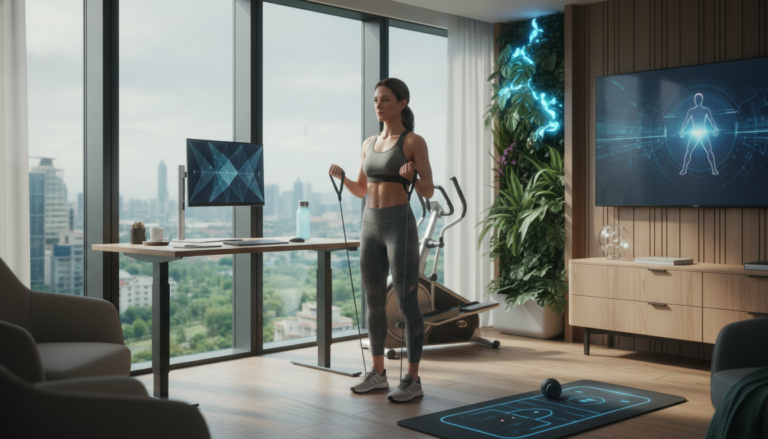
Smart technology has revolutionized how we approach fitness in 2026. With the rise of wearable devices, tracking your daily activity has become effortless.
– Step Trackers: Use a step tracker to monitor your daily steps. Aim for a target, such as 10,000 steps per day, and find creative ways to reach that goal, like taking the stairs or walking during lunch breaks.
– Fitness Apps: Download apps that provide personalized workout plans and reminders. Many of these applications offer guided workouts that you can do at home, making it easier to fit exercise into your schedule.
For more strategies on maintaining fitness while at home, check out our guide on how to stay active while working from home in 2026.
How Do Fitness Apps Personalize Workout Plans in 2026?
Modern fitness apps use AI algorithms to analyze your activity levels, fitness goals, schedule constraints, and progress patterns. They automatically adjust workout intensity, duration, and type based on your performance data, creating adaptive programs that evolve with your fitness journey and prevent plateaus.
3. Incorporate Movement into Daily Tasks
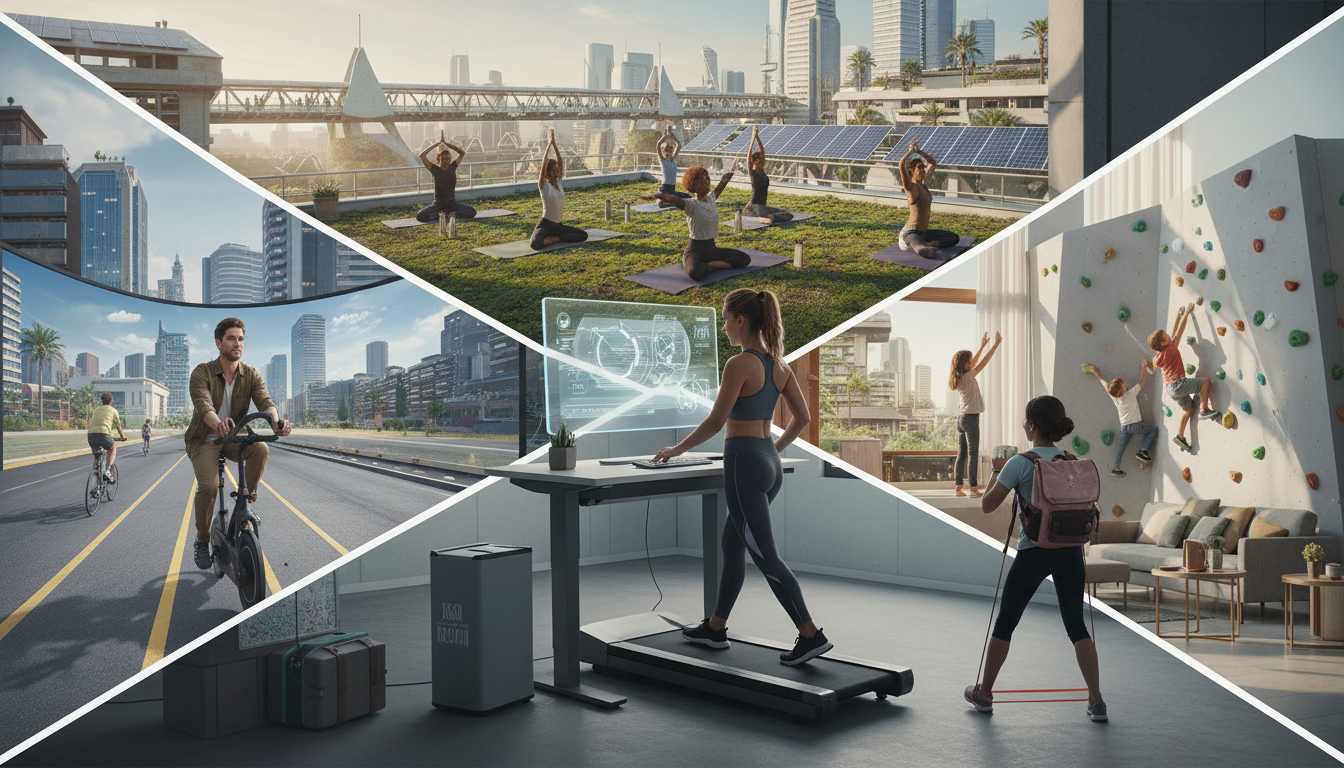
Active commuting through walking, biking, or modifying public transportation routines adds significant physical activity without requiring dedicated workout time. Simple changes like parking farther away, taking stairs, or getting off transit early can increase daily step counts by 2,000-4,000 steps. These micro-movements accumulate throughout the day to provide substantial health benefits.
Active Commuting
One of the simplest ways to add exercise to your daily routine is to incorporate movement into your commute.
– Walking or Biking: If possible, consider walking or biking to work instead of driving. Not only will this increase your daily physical activity, but it can also save on transportation costs.
– Public Transport: If you rely on public transportation, get off a stop early and walk the remaining distance. This small change can significantly boost your daily step count without requiring extra time.
Can You Get Adequate Exercise Through Daily Task Modifications?
Yes, research demonstrates that accumulating 150 minutes of moderate activity through daily tasks meets recommended exercise guidelines. Activities like active commuting, taking stairs, doing household chores vigorously, and standing while working combine to provide cardiovascular benefits comparable to structured gym workouts when maintained consistently.
4. Engage in Family Fitness Activities
Making exercise a family affair strengthens relationships while promoting collective health, with activities like hiking, biking, and home workout sessions suitable for all ages. Family fitness creates accountability, makes exercise more enjoyable, and establishes healthy habits for children. This approach transforms physical activity from an individual obligation into quality bonding time.
Make Exercise a Family Affair
In 2026, many families are prioritizing health and fitness together. Engaging in physical activities as a family can strengthen bonds and promote a shared commitment to wellness.
– Outdoor Adventures: Plan family outings that involve physical activities, such as hiking, biking, or playing sports. These activities not only provide exercise but also encourage quality time spent together.
– Home Workouts: Consider scheduling family workout sessions at home. Use online videos to follow along with workouts suitable for all ages, making exercise a fun and inclusive experience.
Why Are Family Fitness Activities More Sustainable Than Solo Workouts?
Family fitness activities create built-in social support, shared accountability, and reduced barriers to participation. When exercise becomes a family tradition rather than an individual task, consistency rates increase by 55% according to wellness studies. Children who exercise with parents are also 70% more likely to maintain active lifestyles into adulthood.
5. Embrace Micro-Workouts
Micro-workouts are five-to-ten-minute exercise bursts that fit into busy schedules and deliver cumulative fitness benefits comparable to longer traditional workouts. These short sessions can include bodyweight exercises, brisk walking intervals, or quick stretching routines performed throughout the day. Research shows that three 10-minute workout sessions provide similar cardiovascular and metabolic benefits as one 30-minute session.
Short Bursts of Activity
Micro-workouts have gained popularity in 2026 as a practical solution for those with tight schedules. These short bursts of exercise can be incredibly effective and can easily fit into your day.
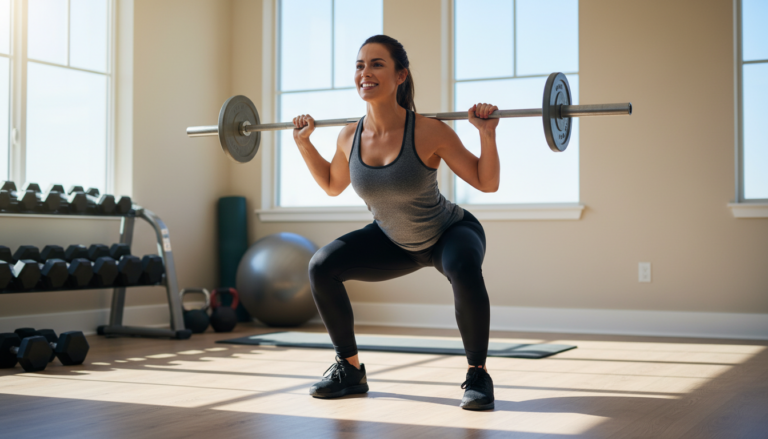
– Five-Minute Routines: Incorporate five-minute exercise routines during breaks. Whether it’s doing push-ups, squats, or jumping jacks, these quick sessions can add up over the day.
– Interval Training: Try interval training during your day-to-day activities. For instance, walk briskly for one minute and then slow down for two minutes, repeating this cycle throughout your walk.
To build on these strategies and create lasting habits, read our comprehensive guide on how to build a sustainable fitness routine for 2026.
How Many Micro-Workouts Should You Do Daily for Health Benefits?
Aim for 4-6 micro-workouts of 5-10 minutes each throughout your day to meet the recommended 150 minutes of weekly moderate exercise. This approach is particularly effective for desk workers and busy professionals who struggle with finding dedicated workout time, as these brief sessions prevent prolonged sedentary periods and boost metabolism.
Conclusion
Incorporating exercise into your daily life in 2026 doesn’t have to be a daunting task. By gamifying your workouts, leveraging smart technology, integrating movement into daily tasks, engaging in family activities, and embracing micro-workouts, you can effortlessly enhance your physical activity levels. Start today, and make fitness a fun and integral part of your daily routine!
For a holistic approach to health, consider creating a personalized wellness routine for 2026 that incorporates both exercise and other wellness practices.
Frequently Asked Questions
How can I incorporate exercise into my daily life with a busy schedule in 2026?
Incorporate exercise through micro-workouts (5-10 minute sessions), active commuting (walking or biking to work), and movement integration during daily tasks like taking stairs or desk stretches. Use fitness apps to schedule brief workout reminders throughout your day. These strategies require no additional time blocks and accumulate to meet recommended activity levels while fitting seamlessly into existing routines.
What are the best micro-workouts for beginners starting an active lifestyle?
Beginners should focus on bodyweight exercises like squats, wall push-ups, walking lunges, standing knee raises, and desk planks. Start with 5-minute sessions including 10-15 repetitions of 3-4 exercises with minimal rest. Gradually increase duration and intensity as fitness improves. These movements require no equipment and can be performed anywhere, making them ideal for establishing consistent exercise habits.
How does gamifying workouts improve fitness motivation and results?
Gamification leverages psychological principles like achievement rewards, social competition, and progress visualization to increase intrinsic motivation. Fitness apps with challenges, badges, and leaderboards create accountability and make exercise enjoyable rather than obligatory. Studies show gamified approaches increase workout consistency by 30-40% and improve long-term adherence to fitness goals compared to traditional exercise programs.
What family activities count as exercise for health and wellness?
Family activities including hiking, biking, playing active sports (soccer, basketball, tennis), swimming, dance sessions, active video games, playground activities, and yard work all provide significant exercise benefits. Aim for 30-60 minutes of these activities 3-5 times weekly. These shared experiences combine cardiovascular exercise with strength building while promoting family bonding and establishing healthy lifestyle patterns for children.
Can daily life exercise replace traditional gym workouts in 2026?
Yes, accumulated daily activity can meet fitness guidelines when totaling 150 minutes of moderate exercise weekly. Combining active commuting, micro-workouts, stair climbing, and movement-rich daily tasks provides cardiovascular and metabolic benefits comparable to gym sessions. However, traditional strength training may still be needed for specific muscle building goals. The key is consistency and intentionally incorporating movement throughout your day.
What smart technology is most effective for tracking daily exercise?
Wearable fitness trackers (smartwatches and fitness bands) with heart rate monitoring, step counting, and activity recognition provide the most comprehensive tracking. Popular 2026 devices include AI-powered coaching features, automated workout detection, and integration with health apps. Choose devices that sync with your smartphone, offer personalized insights, and provide motivational reminders to maintain consistency in your active lifestyle.
How do I motivate myself to stay active throughout the day?
Set specific activity goals using SMART criteria, use fitness apps with reminder notifications, find an accountability partner or join virtual challenges, reward yourself for milestone achievements, and track progress visually. Start small with achievable targets like 5-minute movement breaks every hour. Celebrate consistency over perfection, and choose activities you genuinely enjoy to transform exercise from obligation to pleasure.
What are the health benefits of incorporating exercise into daily life in 2026?
Regular daily exercise improves cardiovascular health, reduces chronic disease risk by 30-50%, enhances mental health and reduces anxiety/depression, strengthens immune function, improves sleep quality, increases energy levels, supports healthy weight management, and enhances cognitive function. Even moderate activity like brisk walking for 30 minutes daily significantly reduces mortality risk and improves overall quality of life across all age groups.