
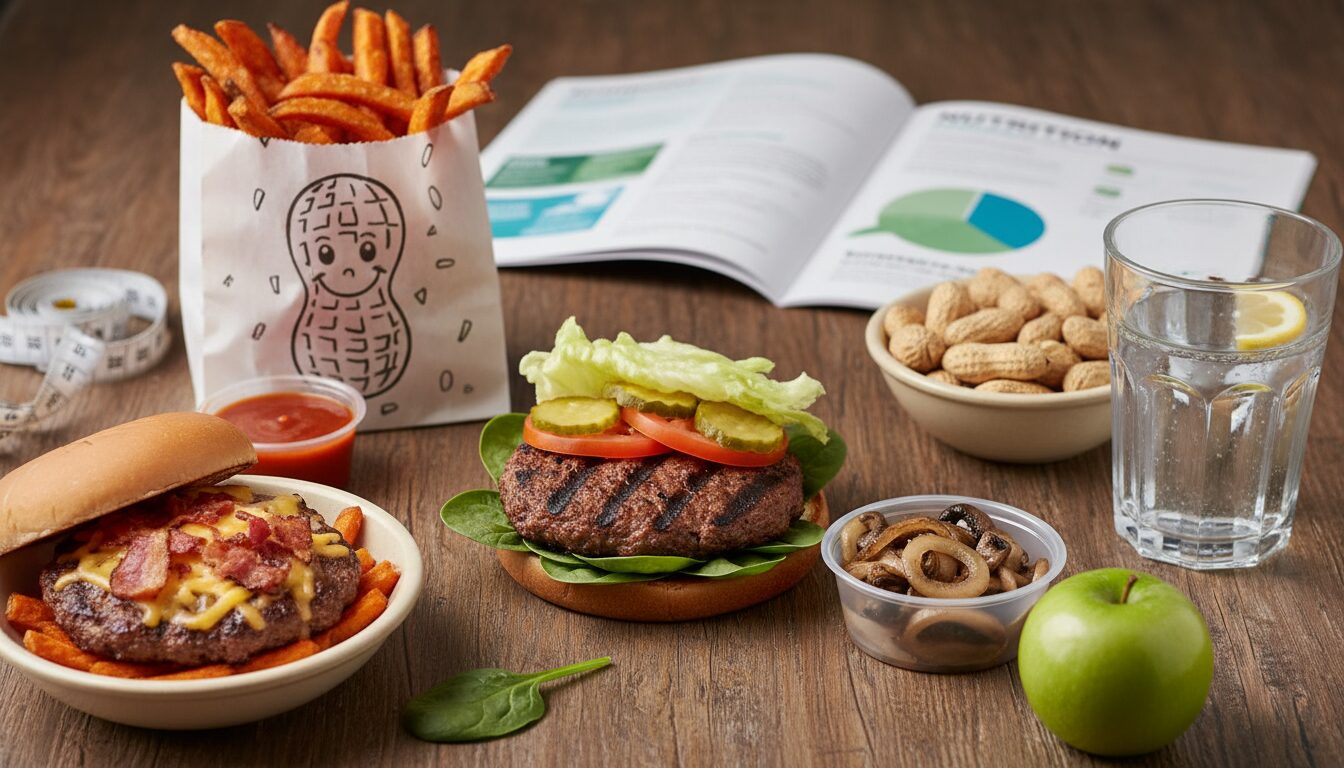
5 Guys Nutrition Guide: Healthy Menu Options
Table of Contents
- How many calories are in Five Guys burgers and menu items?
- Five Guys burger nutrition breakdown by size
- Five Guys fries calories and portion sizes
- Milkshake and drink calorie content
- What are the healthiest Five Guys menu options?
- Lowest calorie Five Guys combinations
- Five Guys protein-rich options
- Five Guys keto options and macro breakdown
- Keto-friendly burger modifications
- Five Guys macro breakdown for low-carb orders
- Five Guys allergen information and dietary restrictions
- Gluten-free options at Five Guys
- Dairy-free Five Guys menu items
- How to optimize Five Guys portion sizes for calorie control
- Single vs double patty calorie differences
- Topping modifications for lower calories
- Five Guys nutrition for pre and post-workout meals
- Best Five Guys orders for muscle building
- Post-workout recovery meal combinations
- How Five Guys ingredient quality affects nutritional value
- Five Guys menu nutrition compared to other burger chains
- Is Five Guys healthier than McDonald’s?
- Can you eat Five Guys on keto?
- What’s the lowest calorie item at Five Guys?
- Are Five Guys fries gluten-free?
- How much protein is in a Five Guys burger?
- What oil does Five Guys use for frying?
- Can diabetics eat at Five Guys?
- What’s the healthiest five guys order?
At a Glance: This comprehensive 5 guys nutrition guide breaks down calories, macros, and healthiest menu options to help you make informed choices at Five Guys. You’ll discover keto modifications, allergen information, and portion control strategies for healthier fast-food dining.
What You’ll Learn:
1. Exact calorie counts for all Five Guys menu items
2. Healthiest burger and meal combinations under 800 calories
3. Keto-friendly modifications and macro breakdowns
4. Allergen information and dietary restriction options
5. Pre and post-workout meal strategies
6. How Five Guys compares nutritionally to other burger chains
How many calories are in Five Guys burgers and menu items?
Five Guys menu items range from 0 calories for diet beverages to over 1,500 calories for large milkshakes with mix-ins. Understanding these calorie ranges helps you make informed choices whether you’re tracking calories or simply want to understand what you’re consuming.
For comprehensive nutritional details beyond calories, refer to our complete Five Guys nutrition facts guide which covers detailed macro breakdowns and ingredient analysis.
| Menu Category | Calorie Range |
|---|---|
| Burgers | 540-980 calories |
| Fries | 528-946 calories |
| Hot Dogs | 520-615 calories |
| Sandwiches | 440-760 calories |
| Milkshakes | 670-1,500+ calories |
| Beverages | 0-280 calories |
The foundation items include a hamburger at 540 calories, cheeseburger at 630 calories, and little fries at 528 calories. These baseline numbers help you build meals that fit your nutritional goals.
Five Guys burger nutrition breakdown by size
Burger calories progress significantly from single to double patties, with cheese and bacon additions creating distinct nutritional tiers. The five guys burger nutrition varies dramatically based on your protein and topping choices.
- Little Hamburger (540 calories): 26g protein, 26g fat, 1,040mg sodium – the most modest option
- Little Cheeseburger (630 calories): 30g protein, 32g fat, 1,180mg sodium – adds 90 calories from cheese
- Regular Hamburger (700 calories): 46g protein, 43g fat, 1,310mg sodium – double meat significantly increases protein
- Regular Cheeseburger (840 calories): 50g protein, 55g fat, 1,590mg sodium – the balanced choice for most appetites
- Bacon Cheeseburger (980 calories): 56g protein, 62g fat, 1,770mg sodium – highest calorie burger option
Sodium content increases substantially with size and toppings, often exceeding half your daily recommended intake in a single burger. If you’re concerned about digestive health after consuming high-sodium, processed foods, consider exploring evidence-based strategies for maintaining optimal gut health.
Five Guys fries calories and portion sizes
Little fries contain 528 calories while regular fries pack 946 calories – nearly double the energy intake. The five guys fries calories reflect generous portion sizes, with little fries weighing approximately 227 grams and regular fries weighing 390 grams.
Regular fries deliver 57g fat and 1,327mg sodium alongside their 946 calories, making them a significant contributor to your daily intake. The cooking method using peanut oil adds flavor but increases calorie density compared to baked alternatives. Since fried foods can potentially cause digestive discomfort in sensitive individuals, maintaining good digestive health through quality gut health supplements may be beneficial for frequent fast-food consumers.
Milkshake and drink calorie content
Milkshakes at Five Guys range from 670 calories for a basic vanilla shake to over 1,500 calories when loaded with multiple mix-ins. These high-calorie beverages can easily exceed an entire meal’s worth of energy.
The caloric impact comes from the ice cream base (around 670 calories) plus each mix-in adding 70-300 additional calories. Popular combinations like chocolate-peanut butter can reach 1,200+ calories, while simpler fruit additions stay closer to 800 calories total.
What are the healthiest Five Guys menu options?
The healthiest Five Guys orders focus on single patties with vegetable toppings, avoiding fries and caloric beverages. Strategic menu choices can create satisfying meals under 600 calories while maintaining high protein content.
As part of a broader approach to wellness, incorporating healthy eating habits like those found at fast-casual restaurants aligns with essential preventive health strategies for modern living.
Lowest calorie Five Guys combinations
Complete meals under 800 calories require careful selection but remain satisfying and nutritious. These combinations prioritize protein while managing caloric density through smart substitutions.
Ultra-Low Options (Under 600 calories):
– Little hamburger + water = 540 calories, 26g protein
– Veggie sandwich + diet soda = 440 calories, 16g protein
– Little cheeseburger (no bun) + water = 380 calories, 26g protein
Balanced Options (600-800 calories):
– Little cheeseburger + little fries + diet drink = 1,158 calories (exceeds range)
– Better choice: Regular hamburger + water = 700 calories, 46g protein
– Little bacon burger + water = 710 calories, 32g protein
Portion Control Strategy:
Share regular fries between two people or save half your burger for later to manage calorie intake while enjoying the full Five Guys experience.
Five Guys protein-rich options
Regular burgers with double patties deliver 46-56g protein, making them excellent post-workout options. The protein quality from beef provides complete amino acids essential for muscle recovery and satiation.
Top protein choices include:
1. Bacon Cheeseburger: 56g protein in 980 calories
2. Regular Cheeseburger: 50g protein in 840 calories
3. Regular Hamburger: 46g protein in 700 calories
4. Little Bacon Burger: 32g protein in 710 calories
These options provide 25-35% of daily protein needs in a single meal, supporting muscle maintenance and metabolic health goals.
Five Guys keto options and macro breakdown
Five Guys offers excellent keto compatibility when you remove buns and avoid fries, creating meals with under 10g net carbs. The high-fat, moderate-protein content of bunless burgers aligns perfectly with ketogenic macro requirements.
Keto-friendly burger modifications
Bunless burgers wrapped in lettuce reduce carbs from 40g to under 8g while maintaining full flavor and satisfaction. This simple modification transforms any burger into a keto-compliant meal.
Perfect Keto Orders:
– Bunless Bacon Cheeseburger: 6g net carbs, 62g fat, 56g protein (830 calories)
– Bunless Regular Cheeseburger: 5g net carbs, 55g fat, 50g protein (690 calories)
– Bunless Little Cheeseburger: 4g net carbs, 32g fat, 30g protein (480 calories)
Keto-Safe Toppings:
– Lettuce, tomato, pickles, onions (2-3g carbs total)
– Cheese, bacon, mayo (virtually zero carbs)
– Mustard (0g carbs)
Avoid These Items:
– Buns (39g carbs)
– Fries (72g carbs)
– Milkshakes (70+ carbs)
– Ketchup (4g carbs per packet)
Five Guys macro breakdown for low-carb orders
Optimal keto macros at Five Guys achieve 70% fat, 25% protein, 5% carbs through strategic ordering. These ratios support ketosis while providing satisfying, restaurant-quality meals.
| Order Type | Calories | Fat (g) | Protein (g) | Net Carbs (g) | Fat % | Protein % | Carb % |
|---|---|---|---|---|---|---|---|
| Bunless Little Cheeseburger | 480 | 32 | 30 | 4 | 60% | 25% | 3% |
| Bunless Regular Cheeseburger | 690 | 55 | 50 | 5 | 72% | 29% | 3% |
| Bunless Bacon Cheeseburger | 830 | 62 | 56 | 6 | 67% | 27% | 3% |
Add extra cheese or mayo to increase fat percentage if following strict keto ratios.
Five Guys allergen information and dietary restrictions
Five Guys accommodates most major allergens through ingredient modifications, though cross-contamination risks exist in the kitchen environment. Understanding allergen protocols helps you order safely according to your dietary restrictions.
Gluten-free options at Five Guys
All burger patties, most toppings, and fries are naturally gluten-free, but cross-contamination occurs on shared cooking surfaces. Those with celiac disease should exercise caution, while gluten-sensitive individuals often tolerate Five Guys well.
Confirmed Gluten-Free Items:
– All beef patties and hot dogs
– Cheese, bacon, lettuce, tomato, onions
– Fries (cooked in dedicated fryers)
– Milkshakes and most beverages
Contains Gluten:
– All buns and bread products
– Malt vinegar
– Some seasonings
Cross-Contamination Risks:
Grills are shared between bun and bunless orders, creating potential gluten exposure. Request fresh lettuce wrapping and communicate celiac concerns to staff.
Dairy-free Five Guys menu items
Dairy-free ordering requires avoiding cheese, milkshakes, and mayo while focusing on plain patties with vegetable toppings. Multiple satisfying combinations remain available for lactose-intolerant customers.
Safe Dairy-Free Choices:
– Hamburger patties (plain)
– Bacon, lettuce, tomato, onions, pickles
– Fries cooked in peanut oil
– Most sodas and beverages
– Ketchup, mustard, hot sauce
Contains Dairy:
– All cheese varieties
– Milkshakes
– Mayo (contains eggs, may contain dairy)
– Some bun varieties
Always verify current ingredient lists, as suppliers and formulations change periodically.
How to optimize Five Guys portion sizes for calorie control
Strategic portion control at Five Guys involves choosing “little” sizes, sharing large items, and focusing on protein-dense options over calorie-dense sides. These approaches let you enjoy the restaurant while maintaining reasonable calorie intake.
Single vs double patty calorie differences
Little burgers contain single patties while regular burgers feature double patties, creating a 160-calorie difference in base burgers. This distinction significantly impacts both calories and protein content.
Calorie Impact Comparison:
– Little Hamburger: 540 calories, 26g protein
– Regular Hamburger: 700 calories, 46g protein
– Calorie difference: 160 calories for 20g additional protein
When to Choose Each Size:
– Choose Little: Weight management, lighter appetite, pairing with fries
– Choose Regular: High protein needs, post-workout meals, skipping sides
The regular size offers better protein-per-calorie efficiency (0.66g vs 0.48g per calorie), making it smarter for muscle-building goals.
Topping modifications for lower calories
Smart topping swaps can reduce burger calories by 100-300 while maintaining flavor through strategic replacements. Focus on high-flavor, low-calorie additions instead of calorie-dense options.
High-Calorie Toppings to Limit:
– Cheese: +140 calories
– Bacon: +80 calories
– Mayo: +100 calories
Flavor-Rich, Lower-Calorie Alternatives:
– Mustard instead of mayo: -85 calories
– Extra lettuce and tomato: +10 calories
– Pickles and onions: +5 calories
– Hot sauce: +0 calories
Calorie-Cutting Combinations:
– Regular hamburger with mustard, lettuce, tomato, onions: 715 calories
– vs. Regular cheeseburger with mayo and bacon: 1,120 calories
– Savings: 405 calories with maintained satisfaction
Five Guys nutrition for pre and post-workout meals
Five Guys offers excellent post-workout nutrition through high-protein burgers, while pre-workout options require careful timing and portion control. Strategic ordering aligns with exercise nutrition principles for optimal performance and recovery.
Best Five Guys orders for muscle building
Regular and bacon cheeseburgers provide 46-56g complete protein ideal for muscle protein synthesis when consumed within 2 hours post-workout. The amino acid profile from beef supports optimal recovery and growth.
Top Muscle-Building Orders:
1. Bacon Cheeseburger (980 calories, 56g protein): Maximum protein for serious athletes
2. Regular Cheeseburger (840 calories, 50g protein): Balanced option for most lifters
3. Regular Hamburger + Little Fries (1,228 calories, 46g protein, 72g carbs): Includes carbs for glycogen replenishment
Timing Considerations:
– Post-workout (0-2 hours): Any high-protein burger for muscle repair
– Pre-workout (2+ hours): Little burger options to avoid digestive discomfort
– Rest days: Focus on little sizes to match lower calorie needs
Post-workout recovery meal combinations
Optimal recovery meals combine high-quality protein with moderate carbohydrates, achievable through burger-and-fries combinations or strategic modifications. The 3:1 or 4:1 carb-to-protein ratio supports glycogen replenishment and muscle repair.
Complete Recovery Meals:
For Endurance Athletes (Higher Carb Needs):
– Regular cheeseburger + little fries + chocolate milk
– Macros: 1,368 calories, 54g protein, 105g carbs
– Carb:Protein ratio: 2:1
For Strength Athletes (Higher Protein Focus):
– Bacon cheeseburger + water
– Macros: 980 calories, 56g protein, 40g carbs
– Emphasizes protein for muscle repair
Budget-Conscious Recovery:
– Regular hamburger + shared little fries
– Macros: ~964 calories, 46g protein, 65g carbs
– Effective nutrition at moderate cost
Time these meals within 30-120 minutes post-exercise for optimal nutrient uptake and recovery benefits.
How Five Guys ingredient quality affects nutritional value
Five Guys uses fresh, never-frozen beef and hand-cut potatoes, creating higher nutritional density compared to heavily processed fast-food alternatives. These quality choices impact both macro and micronutrient profiles.
The fresh beef contains higher levels of naturally occurring vitamins B12, zinc, and iron compared to frozen patties. Hand-cut fries retain more potato nutrients, though the frying process still adds significant calories from oil absorption.
Quality Indicators:
– Beef: Never frozen, no fillers, higher protein bioavailability
– Potatoes: Fresh-cut, skin-on options retain fiber and potassium
– Oil: Peanut oil provides vitamin E and monounsaturated fats
– Toppings: Fresh vegetables add vitamins C, K, and folate
While still calorie-dense, these quality ingredients provide more nutritional value per calorie than highly processed alternatives.
Five Guys menu nutrition compared to other burger chains
Five Guys burgers contain 200-400 more calories than comparable items at McDonald’s or Burger King, but offer superior protein content and ingredient quality. The calorie density reflects larger portions and premium ingredients rather than empty calories.
| Chain | Cheeseburger Calories | Protein (g) | Sodium (mg) | Notable Differences |
|---|---|---|---|---|
| Five Guys Regular | 840 | 50 | 1,590 | Double patty, fresh beef |
| McDonald’s Quarter Pounder | 520 | 26 | 1,040 | Single patty, frozen beef |
| Burger King Whopper | 660 | 28 | 980 | Larger bun, flame-grilled |
| Wendy’s Dave’s Single | 570 | 29 | 1,250 | Fresh beef, smaller portion |
Five Guys Advantages:
– Highest protein content per serving
– Fresh, never-frozen beef
– Customizable toppings at no extra cost
– No artificial preservatives in beef
Five Guys Disadvantages:
– Highest calorie and sodium content
– Limited lower-calorie options
– No salads or grilled chicken alternatives
– Higher price point
Is Five Guys healthier than McDonald’s?
Five Guys offers higher-quality ingredients and more protein, but McDonald’s provides better portion control and lower-calorie options. The “healthier” choice depends on your specific nutritional priorities and goals.
Five Guys Wins For:
– Ingredient quality and freshness
– Protein content and satiation
– Avoiding artificial preservatives
– Customization without upcharges
McDonald’s Wins For:
– Calorie control and weight management
– Broader menu variety (salads, grilled options)
– Sodium management
– Budget-friendly pricing
Can you eat Five Guys on keto?
Yes, Five Guys works excellently for keto diets when you order bunless burgers with high-fat toppings. The restaurant’s flexibility with modifications makes it one of the most keto-friendly fast-food options.
Perfect Keto Strategy:
– Order any burger “bunless” (wrapped in lettuce)
– Add cheese, bacon, and mayo for healthy fats
– Choose mustard over ketchup
– Skip fries and opt for water or diet drinks
– Net carbs stay under 8g per meal
What’s the lowest calorie item at Five Guys?
The veggie sandwich contains 440 calories, making it the lowest-calorie substantial menu item. However, bunless little hamburgers (around 380 calories) offer better protein content for similar calories.
Lowest Calorie Options:
1. Diet beverages: 0 calories
2. Bunless little hamburger: ~380 calories, 26g protein
3. Veggie sandwich: 440 calories, 16g protein
4. Little hamburger: 540 calories, 26g protein
Are Five Guys fries gluten-free?
Five Guys fries are made from potatoes and cooked in dedicated peanut oil fryers, making them naturally gluten-free. The restaurant uses separate fryers for fries and maintains strict protocols to prevent cross-contamination.
However, individuals with severe celiac disease should still communicate their needs to staff, as kitchen environments always carry some cross-contamination risk from shared surfaces and utensils.
How much protein is in a Five Guys burger?
Five Guys burgers range from 26g protein in little hamburgers to 56g protein in bacon cheeseburgers. The double patties in regular burgers significantly increase protein content compared to single-patty options.
Protein Content by Burger:
– Little Hamburger: 26g
– Little Cheeseburger: 30g
– Regular Hamburger: 46g
– Regular Cheeseburger: 50g
– Bacon Cheeseburger: 56g
What oil does Five Guys use for frying?
Five Guys exclusively uses peanut oil for all frying, including french fries and other fried items. This choice provides superior flavor and cooking properties but creates serious allergy concerns for peanut-sensitive individuals.
Peanut oil offers high smoke point, neutral flavor enhancement, and contains beneficial monounsaturated fats, though the frying process still creates calorie-dense foods regardless of oil choice.
Can diabetics eat at Five Guys?
Diabetics can eat at Five Guys by choosing bunless burgers and avoiding fries, focusing on protein and healthy fats while minimizing carbohydrate intake. This approach manages blood sugar while providing satisfying meals.
Diabetic-Friendly Strategy:
– Order bunless burgers (5-8g carbs vs. 40g+ with bun)
– Choose water or diet beverages
– Skip fries (72g carbs) and milkshakes
– Focus on protein and fat for stable blood sugar
– Monitor portion sizes to manage overall caloric intake
What’s the healthiest five guys order?
The healthiest Five Guys order balances calories, protein, and nutrients: a little cheeseburger with lettuce, tomato, onions, and mustard, paired with water. This combination provides 630 calories and 30g protein while including vegetables and avoiding empty calories.
Optimized Healthy Order:
– Little cheeseburger (bunless for lower carbs)
– Extra lettuce, tomato, onions, pickles
– Mustard instead of mayo
– Water or unsweetened tea
– Total: ~480 calories, 30g protein, high satiation
This order maximizes nutrition density while controlling calories, sodium, and unnecessary additives.