
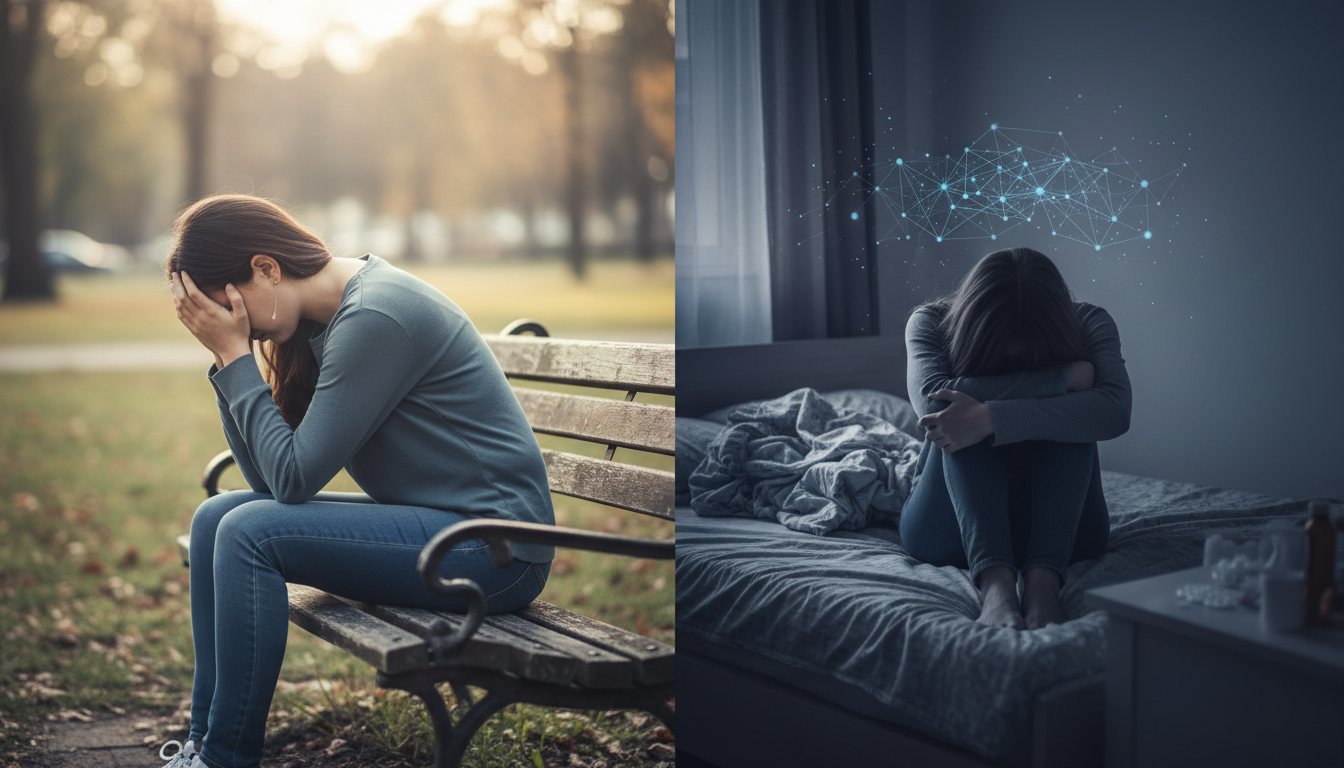
Depression vs Sadness: Understanding the Key Differences and When to Seek Help
TL;DR
While sadness is a temporary emotional response to specific events that resolves naturally, depression is a persistent mental health disorder lasting at least two weeks that significantly impairs daily functioning and involves measurable brain chemistry changes. Depression affects neurotransmitter systems and creates pervasive hopelessness that colors every aspect of life, unlike sadness which allows for normal function in unaffected areas. If you experience persistent sadness, loss of interest in activities, and impaired daily functioning for two weeks or more, seek professional mental health evaluation rather than waiting for symptoms to resolve on their own.
Table of Contents
– What Is the Fundamental Difference Between Depression and Sadness?
– How Long Does Normal Sadness Last?
– When Does Sadness Cross Into Depression Territory?
– The Science Behind Depression: Brain Chemistry and Physiological Differences
– The Role of Gut Health in Depression
– Nutritional Deficiencies and Depression
– Recognizing the Warning Signs: Symptoms and Duration
– Physical Symptoms Often Overlooked
– Seasonal Depression Signs
– Different Types of Sadness vs Clinical Depression
– Adjustment Disorders vs Major Depression
– Professional Assessment and When to Seek Help
– Self-Assessment Guidelines
– What to Expect During Professional Evaluation
– Treatment Options and Recovery Paths
– Functional Medicine Approach to Depression
– Lifestyle Interventions and Self-Care
– Building Support Systems and Preventive Strategies
– Technology and Mental Health Monitoring
– Frequently Asked Questions
– Is it normal to feel sad every day?
– How can I tell if my sadness is actually depression?
– Can depression go away on its own without treatment?
– What’s the difference between grief and depression?
– How long does it take for depression treatment to work?
– Can lifestyle changes alone treat depression?
– What should I do if someone I know shows signs of depression?
– Are depression screening tools accurate?
– Moving Forward with Hope and Understanding
—
Feeling sad is a natural human emotion that everyone experiences throughout life. However, distinguishing between normal sadness and clinical depression remains one of the most important skills for maintaining mental wellness. The fundamental difference between depression vs sadness lies in duration, intensity, and impact on daily functioning – while sadness is typically temporary and situational, depression involves persistent symptoms that significantly impair your ability to work, sleep, eat, and enjoy life.
According to the National Institute of Mental Health, major depressive disorder affects approximately 8.3% of adults in the United States, making it one of the most common mental health conditions. Yet many people struggle to recognize when their emotional state has shifted from normal sadness into something requiring professional attention.
This comprehensive guide will help you understand the critical distinctions between temporary emotional responses and clinical depression, providing you with the knowledge to recognize warning signs and seek appropriate support when needed.
What Is the Fundamental Difference Between Depression and Sadness?
Depression is a persistent mental health disorder that affects brain chemistry and daily functioning, while sadness is a normal emotional response to specific events or circumstances. Sadness typically resolves naturally over time, whereas depression requires professional treatment to improve.
The key distinction lies in several measurable factors. Sadness usually has an identifiable trigger – losing a job, ending a relationship, or experiencing disappointment. Depression, however, can occur without any apparent cause and persists even when life circumstances improve. The World Health Organization defines depression as a mood disorder characterized by persistent sadness and loss of interest in activities, accompanied by an inability to carry out daily activities for at least two weeks.
Temporary sadness vs depression also differs in scope of impact. When you’re sad, you might feel down about specific aspects of your life while maintaining normal function in other areas. Depression creates a pervasive shift in how your brain processes emotions, often requiring neuroscience-based approaches to rewire thought patterns and restore healthy mental functioning.
The Science Behind Depression: Brain Chemistry and Physiological Differences
Depression involves measurable changes in neurotransmitter systems, particularly serotonin, dopamine, and norepinephrine levels, while sadness represents normal emotional processing without these biochemical alterations.
Research shows that depression affects multiple brain regions, including the prefrontal cortex, hippocampus, and amygdala. These changes can be observed through neuroimaging and correlate with symptoms like impaired decision-making, memory problems, and heightened stress responses.
The Role of Gut Health in Depression
The gut-brain axis plays a crucial role in depression, with approximately 90% of serotonin produced in the digestive system rather than the brain.
Emerging research reveals that optimizing your gut microbiome can significantly impact mood regulation and depressive symptoms. Specific bacterial strains have been linked to neurotransmitter production, making digestive health an essential component of mental wellness.
Nutritional Deficiencies and Depression
Deficiencies in key vitamins and minerals, particularly B vitamins, vitamin D, magnesium, and omega-3 fatty acids, have been strongly associated with increased depression risk.
Understanding which essential vitamins and minerals support optimal brain function can help address underlying nutritional factors that may contribute to mood disorders. Many people with depression show measurable deficiencies in nutrients critical for neurotransmitter synthesis and brain health.
Recognizing the Warning Signs: Symptoms and Duration
Clinical depression symptoms must persist for at least two weeks and include either persistent depressed mood or loss of interest in activities, plus at least four additional symptoms from the diagnostic criteria.
The Diagnostic and Statistical Manual of Mental Disorders (DSM-5) outlines specific criteria that distinguish clinical depression from normal sadness. These symptoms must represent a change from previous functioning and cause clinically significant distress or impairment.
Physical Symptoms Often Overlooked
Depression frequently manifests through physical symptoms including chronic fatigue, sleep disturbances, appetite changes, and unexplained aches and pains.
Many people don’t realize that sleep quality directly impacts immune function and mental health, creating a cycle where poor sleep worsens depression, which in turn further disrupts sleep patterns. Recognizing these physical manifestations helps identify depression even when emotional symptoms seem mild.
Seasonal Depression Signs
Seasonal Affective Disorder (SAD) represents a specific type of depression that occurs predictably during certain seasons, most commonly fall and winter months.
Seasonal depression differs from regular sadness about weather changes because it involves the same core symptoms as major depression but follows a seasonal pattern for at least two consecutive years.
Different Types of Sadness vs Clinical Depression
Various forms of sadness exist on a spectrum, from normal grief responses to adjustment disorders, each requiring different approaches for support and recovery.
Understanding this spectrum helps determine when professional intervention is necessary versus when self-care and time may be sufficient.
Adjustment Disorders vs Major Depression
Adjustment disorders involve emotional responses to specific stressors that exceed what would be considered normal but don’t meet the full criteria for major depressive disorder.
These conditions typically develop within three months of an identifiable stressor and improve once the stressor is removed or the person adapts to the new situation.
Professional Assessment and When to Seek Help
Seek professional evaluation if you experience persistent sadness, loss of interest in activities, and impaired daily functioning for two weeks or more, especially if symptoms worsen or include thoughts of self-harm.
Early intervention significantly improves treatment outcomes and can prevent progression to more severe depression.
Self-Assessment Guidelines
Use validated depression screening tools like the PHQ-9 (Patient Health Questionnaire) as initial self-assessment tools, but always follow up with professional evaluation for accurate diagnosis.
While self-assessment tools provide valuable insights, they cannot replace professional clinical judgment and comprehensive evaluation.
What to Expect During Professional Evaluation
A comprehensive mental health evaluation includes detailed history-taking, symptom assessment, physical examination to rule out medical causes, and sometimes laboratory tests or psychological testing.
Healthcare providers may also assess for co-occurring conditions like anxiety disorders, substance use, or medical conditions that can mimic or worsen depression.
Treatment Options and Recovery Paths
Evidence-based treatments for depression include psychotherapy, medication, lifestyle interventions, and integrated approaches that address underlying root causes of symptoms.
Treatment selection depends on symptom severity, individual preferences, medical history, and response to previous interventions.
Functional Medicine Approach to Depression
Functional medicine addresses depression by identifying and treating underlying root causes such as nutritional deficiencies, hormonal imbalances, inflammatory processes, and gut health issues.
Modern functional medicine platforms now make it easier to access comprehensive root-cause healthcare that goes beyond symptom management to address the underlying factors contributing to depression.
Lifestyle Interventions and Self-Care
Regular exercise, adequate sleep, nutritious diet, stress management, and social connection serve as powerful adjuncts to professional treatment and may prevent depression recurrence.
Research consistently shows that lifestyle interventions can be as effective as medication for mild to moderate depression, particularly when combined with professional support.
Building Support Systems and Preventive Strategies
Strong social connections, regular mental health check-ins, stress management skills, and healthy lifestyle habits serve as protective factors against depression development and recurrence.
Prevention strategies are particularly important for individuals with family history of depression or previous episodes.
Technology and Mental Health Monitoring
Modern health apps and digital tools can support depression management through mood tracking, meditation guidance, sleep monitoring, and connection to professional resources.
Advanced health tracking applications now offer comprehensive wellness monitoring that can help identify early warning signs of depression and track treatment progress over time.
Frequently Asked Questions
Is it normal to feel sad every day?
Feeling sad every day for more than two weeks is not normal and may indicate depression, especially if accompanied by other symptoms like loss of interest, fatigue, or impaired functioning.
Daily sadness that persists without improvement warrants professional evaluation to determine underlying causes and appropriate treatment.
How can I tell if my sadness is actually depression?
Depression differs from sadness in duration (lasting at least two weeks), intensity (significantly impacting daily life), and scope (affecting multiple areas of functioning rather than being situational).
Professional assessment provides the most accurate way to distinguish between normal sadness and clinical depression.
Can depression go away on its own without treatment?
While some mild depressive episodes may improve without formal treatment, moderate to severe depression typically requires professional intervention and has high recurrence rates without proper treatment.
Early treatment significantly improves outcomes and reduces the risk of future episodes.
What’s the difference between grief and depression?
Grief is a natural response to loss that comes in waves and gradually improves over time, while depression involves persistent low mood and loss of interest that doesn’t improve naturally.
Grief typically maintains some capacity for positive emotions and hope, whereas depression creates pervasive hopelessness.
How long does it take for depression treatment to work?
Most depression treatments show initial improvements within 4-6 weeks, with full benefits often taking 8-12 weeks to develop, though individual responses vary significantly.
Combination approaches addressing nutrition, lifestyle, and psychological factors may show benefits more quickly than medication alone.
Can lifestyle changes alone treat depression?
Lifestyle interventions can effectively treat mild depression and serve as important adjuncts for moderate to severe depression, but severe cases typically require professional treatment combined with lifestyle modifications.
Exercise, nutrition optimization, sleep hygiene, and stress management all show evidence for depression treatment and prevention.
What should I do if someone I know shows signs of depression?
Express concern without judgment, encourage professional help, offer specific support rather than general availability, and educate yourself about depression to provide informed assistance.
Avoid minimizing their experience or offering simple solutions to complex mental health challenges.
Are depression screening tools accurate?
Depression screening tools like the PHQ-9 are validated and useful for initial assessment, but they cannot replace comprehensive professional evaluation for accurate diagnosis and treatment planning.
Screening tools help identify potential depression but require clinical interpretation for proper diagnosis.
Moving Forward with Hope and Understanding
Understanding the differences between depression and sadness empowers you to recognize when professional help is needed and removes stigma from seeking mental health support.
Depression is a treatable medical condition, not a personal failing or weakness. With proper support, evidence-based treatment, and comprehensive care that addresses root causes, recovery is not only possible but expected.
Remember that seeking help for persistent sadness or depression demonstrates strength and self-awareness. Mental health is as important as physical health, and both deserve professional attention when problems arise. Whether you’re experiencing normal sadness or clinical depression, support is available, and your wellbeing matters.
If you’re currently struggling with persistent sadness or depression symptoms, reach out to a mental health professional, your primary care doctor, or a trusted support person today. Early intervention leads to better outcomes and can help you return to experiencing the full range of human emotions, including genuine happiness and contentment.