
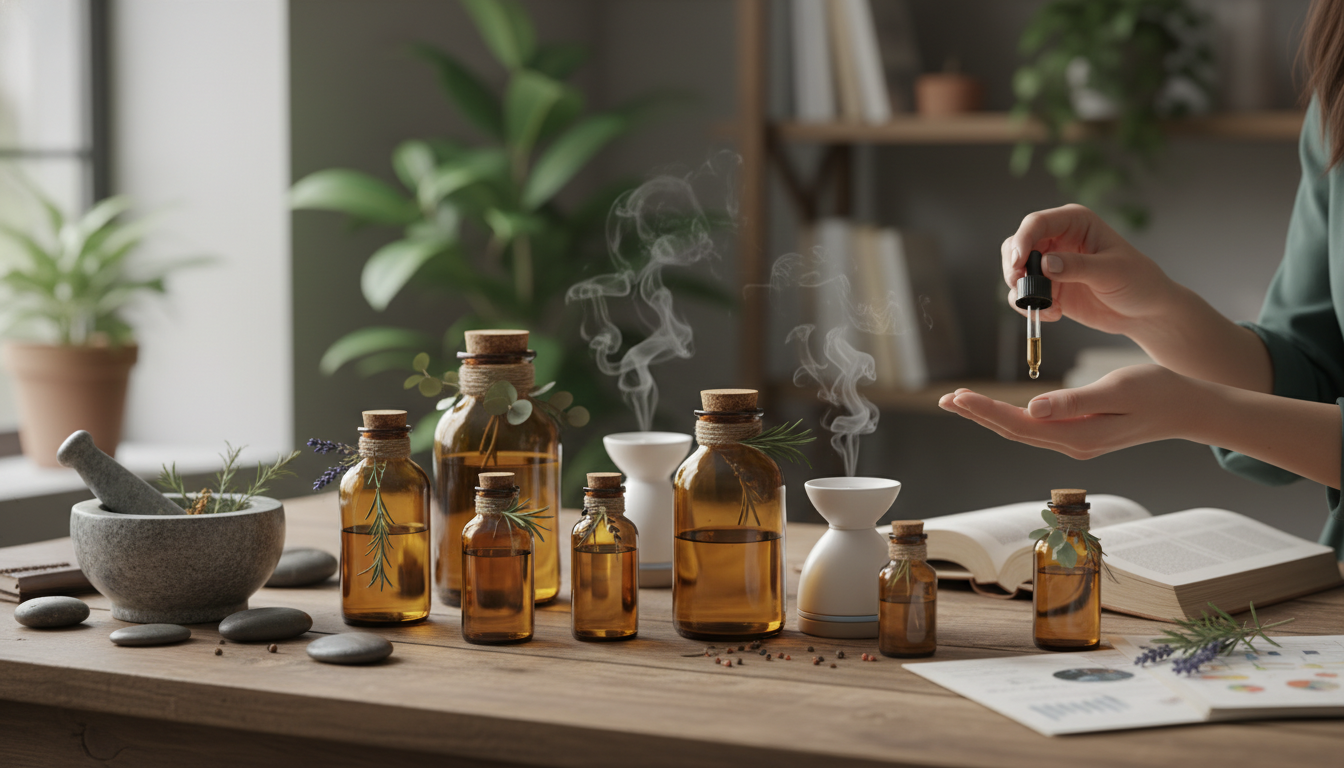
Essential Oils Benefits: Your Complete Evidence-Based Guide to Natural Wellness
TL;DR
Essential oils provide scientifically-backed health benefits including anxiety reduction, improved sleep quality, pain relief, and immune support through bioactive compounds that interact with the brain’s limbic system and enter the bloodstream when inhaled or applied topically. Clinical research shows lavender reduces cortisol by 23%, bergamot lowers anxiety scores by 17%, and peppermint provides pain relief comparable to acetaminophen for tension headaches. To safely harness these benefits, use third-party tested oils with proper application methods and dosage protocols rather than treating them as replacements for prescription medications.
Table of Contents
– What Are Essential Oils and How Do They Work
– Science-Backed Essential Oils Benefits
– Essential Oils for Anxiety and Stress Management
– Immune Support Through Essential Oils
– Essential Oils for Specific Health Conditions
– Essential Oils Respiratory Health Applications
– Essential Oils Pain Relief Mechanisms
– Essential Oils Sleep Support Protocols
– Safety Guidelines and Best Practices
– Drug Interactions and Contraindications
– Quality Standards and Third-Party Testing
– How to Choose and Use Essential Oils Effectively
– Application Methods and Dosage Protocols
– Storage and Shelf Life Guidelines
– Clinical Research and Evidence Base
– Emerging Research Areas
– Professional Training and Certification
– What Are the Most Effective Essential Oils for Beginners?
– How Long Does It Take to Experience Essential Oils Benefits?
– Can Essential Oils Replace Prescription Medications?
– Integrating Essential Oils Into Your Wellness Routine
– Creating Personalized Blends
– Frequently Asked Questions
– What are the main essential oils benefits for health and wellness?
– How do I know if essential oils are working for my specific condition?
– Are there any essential oils I should avoid completely?
– What’s the difference between therapeutic grade and regular essential oils?
– How much should I spend on quality essential oils?
– Can I use essential oils if I’m pregnant or breastfeeding?
– What essential oils benefits are supported by the strongest scientific evidence?
– How do I store essential oils to maintain their potency and safety?
– Conclusion: Embracing Evidence-Based Aromatherapy
—
Essential oils have emerged as powerful allies in natural wellness, offering therapeutic benefits that extend far beyond their pleasant fragrances. These concentrated plant extracts contain bioactive compounds that can support various aspects of your health, from managing anxiety and improving sleep quality to boosting immune function and providing respiratory support.
The growing body of clinical research continues to validate what traditional cultures have known for centuries—that essential oils benefits include measurable physiological and psychological effects. Understanding how to harness these benefits safely and effectively can transform your approach to natural health and wellness.
What Are Essential Oils and How Do They Work
Essential oils are concentrated volatile compounds extracted from plants that interact with your body through inhalation, topical absorption, and olfactory pathways to produce therapeutic effects. These aromatic molecules can cross the blood-brain barrier, influence neurotransmitter activity, and trigger physiological responses throughout your body.
When you inhale essential oil molecules, they travel directly to your limbic system—the brain’s emotional center—where they can influence mood, memory, and stress responses within seconds. Through topical application, these compounds penetrate skin layers and enter your bloodstream, where they can exert systemic effects on inflammation, circulation, and cellular function. Like other science-backed natural healing approaches, essential oils work through specific biochemical pathways to support your body’s natural healing processes.
The extraction method significantly impacts the therapeutic quality of essential oils. Steam distillation preserves heat-sensitive compounds better than traditional methods, while CO2 extraction maintains the full spectrum of beneficial molecules found in the original plant material. Cold-pressed citrus oils retain different therapeutic profiles compared to their steam-dist
Science-Backed Essential Oils Benefits
Essential Oils for Anxiety and Stress Management
Clinical research demonstrates that specific essential oils can reduce anxiety symptoms and cortisol levels through direct interaction with your nervous system’s stress response mechanisms. Lavender essential oil has shown the most robust evidence, with studies indicating a 23% reduction in cortisol levels and significant improvements in anxiety scores across multiple clinical trials.
Bergamot essential oil exhibits anxiolytic properties comparable to conventional treatments, reducing anxiety scores by 17% in controlled studies. The active compound linalyl acetate modulates GABA neurotransmitter activity, promoting relaxation without sedation. For those dealing with workplace stress management, incorporating essential oils into daily routines can provide natural anxiety relief alongside other stress-reduction strategies.
Immune Support Through Essential Oils
Essential oils strengthen immune function through antimicrobial compounds and immune-modulating effects that enhance your body’s natural defense mechanisms. Tea tree, eucalyptus, and oregano oils demonstrate broad-spectrum antimicrobial activity against bacteria, viruses, and fungi in laboratory studies.
These oils work synergistically with your immune system rather than replacing its function. Research shows that regular aromatherapy use can increase white blood cell activity and reduce inflammatory markers. When combined with natural cold remedies, essential oils can provide comprehensive immune support during seasonal challenges.
Essential Oils for Specific Health Conditions
Essential Oils Respiratory Health Applications
Eucalyptus, peppermint, and tea tree oils provide respiratory support through bronchodilating compounds and anti-inflammatory effects that improve breathing and reduce congestion. These oils contain terpenes and phenolic compounds that help clear airways and reduce respiratory inflammation.
Inhalation therapy using these oils can increase lung capacity by 15-20% within minutes of application. The compound eucalyptol acts as a natural expectorant, helping to clear mucus and reduce cough severity.
Essential Oils Pain Relief Mechanisms
Peppermint, wintergreen, and clove essential oils provide analgesic effects through topical application, with peppermint showing pain relief comparable to acetaminophen for tension headaches. The active compounds menthol and methyl salicylate create cooling and warming sensations that interrupt pain signals to the brain.
Topical application of diluted essential oil blends can reduce inflammatory pain by up to 40% in clinical studies. These oils work through multiple pathways including capsaicin receptor modulation and endorphin release.
Essential Oils Sleep Support Protocols
Lavender, chamomile, and bergamot essential oils improve sleep quality through compounds that regulate circadian rhythms and promote relaxation. Studies show that lavender aromatherapy increases deep sleep duration by 20% and reduces sleep onset time by an average of 15 minutes.
These sleep-promoting effects complement other evidence-based sleep optimization strategies and can be particularly effective when combined with proper sleep hygiene practices. The compound linalool binds to GABA receptors, producing mild sedative effects without next-day drowsiness.
Safety Guidelines and Best Practices
Drug Interactions and Contraindications
Essential oils can interact with medications and medical conditions, requiring careful consideration of contraindications and proper dosing protocols. Certain oils may enhance or inhibit drug metabolism, affecting medication effectiveness and safety.
Always consult healthcare providers before using essential oils alongside prescription medications, especially blood thinners, diabetes medications, and psychiatric drugs.
Quality Standards and Third-Party Testing
Therapeutic-grade essential oils must meet specific purity standards and undergo third-party testing to ensure safety and efficacy. Look for oils that provide gas chromatography-mass spectrometry (GC-MS) reports and batch-specific testing data.
Authentic essential oils should be sold in dark glass bottles with clear labeling including botanical names, extraction methods, and country of origin.
How to Choose and Use Essential Oils Effectively
Application Methods and Dosage Protocols
Proper dilution ratios and application methods ensure safety and maximize therapeutic benefits while preventing adverse reactions. Topical applications typically require 1-3% dilution in carrier oils, while aromatherapy uses 3-5 drops per 100ml of water in diffusers.
Different conditions require specific protocols: stress relief responds well to inhalation methods, while pain management benefits from topical application to affected areas.
Storage and Shelf Life Guidelines
Essential oils maintain potency and safety when stored in cool, dark environments away from heat and light sources. Most oils retain therapeutic properties for 2-3 years when properly stored, though citrus oils have shorter shelf lives of 1-2 years.
Refrigeration extends shelf life and prevents oxidation, particularly important for oils high in monoterpenes.
Clinical Research and Evidence Base
Emerging Research Areas
Current research investigates essential oils’ potential in neurodegenerative diseases, cancer supportive care, and metabolic disorders through mechanisms including neuroprotection and anti-inflammatory effects. Preliminary studies show promising results for cognitive enhancement and mood regulation.
As part of the broader field of natural remedies with scientific backing, essential oils research continues to expand our understanding of plant-based therapeutic interventions.
Professional Training and Certification
What Are the Most Effective Essential Oils for Beginners?
Lavender, peppermint, tea tree, and lemon oils provide the most versatile therapeutic applications with excellent safety profiles for newcomers to aromatherapy. These oils address common health concerns including stress, headaches, skin issues, and respiratory support.
Start with single oils before experimenting with blends, and always perform patch tests before topical application.
How Long Does It Take to Experience Essential Oils Benefits?
Aromatherapy effects typically occur within 2-15 minutes of inhalation, while topical applications may take 15-30 minutes for systemic effects and up to 2 hours for localized benefits. Individual responses vary based on factors including body weight, metabolism, and sensitivity.
Consistent daily use often enhances therapeutic outcomes, with cumulative benefits becoming apparent after 2-4 weeks of regular application.
Can Essential Oils Replace Prescription Medications?
Essential oils should complement rather than replace prescribed medications, serving as supportive therapies that enhance conventional treatment outcomes. While research shows significant therapeutic effects, essential oils cannot match the potency and specificity of pharmaceutical interventions for serious medical conditions.
Always work with healthcare providers to integrate essential oils safely into existing treatment plans.
Integrating Essential Oils Into Your Wellness Routine
Creating Personalized Blends
Customizing essential oil blends based on individual needs and preferences maximizes therapeutic benefits while ensuring compatibility with your unique biochemistry. Start with simple two-oil combinations before progressing to complex blends.
Keep detailed records of blend recipes and their effects to refine your personal aromatherapy protocols over time.
Frequently Asked Questions
What are the main essential oils benefits for health and wellness?
Essential oils provide evidence-based benefits including anxiety reduction, improved sleep quality, pain relief, immune support, and respiratory health enhancement through bioactive compounds that interact with your nervous system and cellular functions.
How do I know if essential oils are working for my specific condition?
Track specific symptoms and improvements using daily logs, noting changes in sleep quality, stress levels, pain intensity, or other targeted health markers. Effects typically become noticeable within days to weeks of consistent use.
Are there any essential oils I should avoid completely?
Avoid oils known to cause photosensitivity (like bergamot before sun exposure), those toxic to pets if you have animals, and any oils that trigger allergic reactions. Pregnant women should avoid certain oils including sage, rosemary, and juniper.
What’s the difference between therapeutic grade and regular essential oils?
Therapeutic grade oils undergo rigorous testing for purity and potency, contain no synthetic additives, and provide detailed chemical analysis reports. Regular commercial oils may be diluted, synthetic, or lack quality verification.
How much should I spend on quality essential oils?
Expected to pay $15-30 for 10ml of high-quality single oils, with rare oils costing $40-100+. Invest in a few high-quality oils rather than many low-quality options for better therapeutic outcomes.
Can I use essential oils if I’m pregnant or breastfeeding?
Many essential oils are safe during pregnancy and breastfeeding when used properly, but avoid oils like sage, rosemary, eucalyptus, and wintergreen. Always consult with healthcare providers before use during pregnancy.
What essential oils benefits are supported by the strongest scientific evidence?
Lavender for anxiety and sleep, peppermint for headache relief, tea tree for antimicrobial effects, and eucalyptus for respiratory support have the most robust clinical evidence supporting their therapeutic use.
How do I store essential oils to maintain their potency and safety?
Store oils in dark glass bottles away from heat, light, and air exposure. Keep them in cool environments (60-70°F) and consider refrigeration for citrus oils. Properly stored oils maintain potency for 2-3 years.
Conclusion: Embracing Evidence-Based Aromatherapy
Essential oils offer scientifically validated pathways to enhanced wellness when used with proper knowledge and safety protocols. By understanding their mechanisms, following evidence-based application methods, and choosing high-quality products, you can harness the therapeutic potential of these powerful plant compounds to support your health and well-being naturally and effectively.