How to Use Yoga for Stress Management
At a Glance: Yoga for stress management combines physical postures, controlled breathing, and mindfulness to activate the body’s relaxation response and reduce cortisol levels. Research demonstrates that regular yoga practice can significantly decrease stress hormones while improving emotional regulation and physical tension.
Table of Contents
- The Science Behind Yoga for Stress Relief
- Essential Yoga Poses for Stress and Anxiety Relief
- Forward Folds and Hip Openers
- Gentle Inversions and Twists
- Restorative Poses for Deep Relaxation
- Breathing Techniques for Immediate Stress Relief
- Box Breathing (Sama Vritti)
- Extended Exhale Breathing
- Alternate Nostril Breathing (Nadi Shodhana)
- Creating Your Personalized Yoga Routine
- Assessing Your Stress Patterns
- Building Your Daily Practice Framework
- Adapting for Time Constraints
- Profession-Specific Yoga Strategies
- Yoga for Teachers
- Strategies for Healthcare Workers
- Remote Employee Adaptations
- Measuring Your Progress
- Subjective Progress Indicators
- Objective Measurements
- Creating Progress Milestones
- Combining Yoga with Other Stress Management Techniques
- Yoga and Meditation Integration
- Breathing Techniques and Aromatherapy
- Progressive Muscle Relaxation and Yoga
- Addressing Stress-Related Physical Symptoms
- Poses for Tension Headaches
- Digestive Issues and Yoga
- Muscular Tension Relief
- Building Long-Term Stress Resilience
- Establishing Consistency
- Progressive Challenge and Adaptation
- Integration with Daily Life
- Yoga for Stress Management Resources
- Educational Materials and References
- Academic and Professional Development
- Building Your Knowledge Base
- Your Questions Answered
- How quickly does yoga reduce stress levels?
- Can yoga replace other stress management treatments?
- What time of day works best for stress-relief yoga?
- How long should stress-relief yoga sessions last?
- Do I need special equipment for yoga stress management?
- Can beginners safely practice yoga for stress relief?
- How does yoga compare to other stress management methods?
What You’ll Learn:
1. The scientific mechanisms behind yoga’s stress-reducing effects
2. Essential yoga poses specifically for stress relief
3. Breathing techniques that activate the parasympathetic nervous system
4. How to create personalized yoga routines based on your stress triggers
5. Profession-specific yoga strategies for teachers, healthcare workers, and remote employees
6. Methods to measure your stress reduction progress
7. Ways to combine yoga with other stress management techniques
The Science Behind Yoga for Stress Relief
Stress management by yoga works by activating the parasympathetic nervous system, which counteracts the body’s fight-or-flight response and promotes relaxation. Multiple studies show that consistent yoga practice reduces cortisol levels, lowers blood pressure, and improves heart rate variability—all key indicators of stress reduction.
The physiological changes during yoga practice include decreased production of stress hormones like cortisol and adrenaline, while increasing the release of GABA (gamma-aminobutyric acid), a neurotransmitter that promotes calm and relaxation. This biochemical shift helps break the cycle of chronic stress that many people experience. Additionally, yoga’s calming effects complement other natural approaches to immune system support, as chronic stress is known to weaken immune function.
Yoga’s effectiveness stems from its three-pronged approach: physical movement releases muscular tension, controlled breathing regulates the nervous system, and mindful awareness helps identify and address stress triggers before they escalate. Research published in the Journal of Health Psychology demonstrates that participants who practiced yoga for eight weeks showed significant reductions in perceived stress levels compared to control groups.
Key Takeaway: Yoga reduces stress through measurable physiological changes, including lowered cortisol levels and improved nervous system regulation, making it an evidence-based stress management tool.
Essential Yoga Poses for Stress and Anxiety Relief
The most effective yoga poses for stress relief target the nervous system through gentle movements that promote relaxation and release physical tension. These poses work by stimulating the vagus nerve, which signals the body to shift from stress mode into rest-and-digest mode.
Forward Folds and Hip Openers
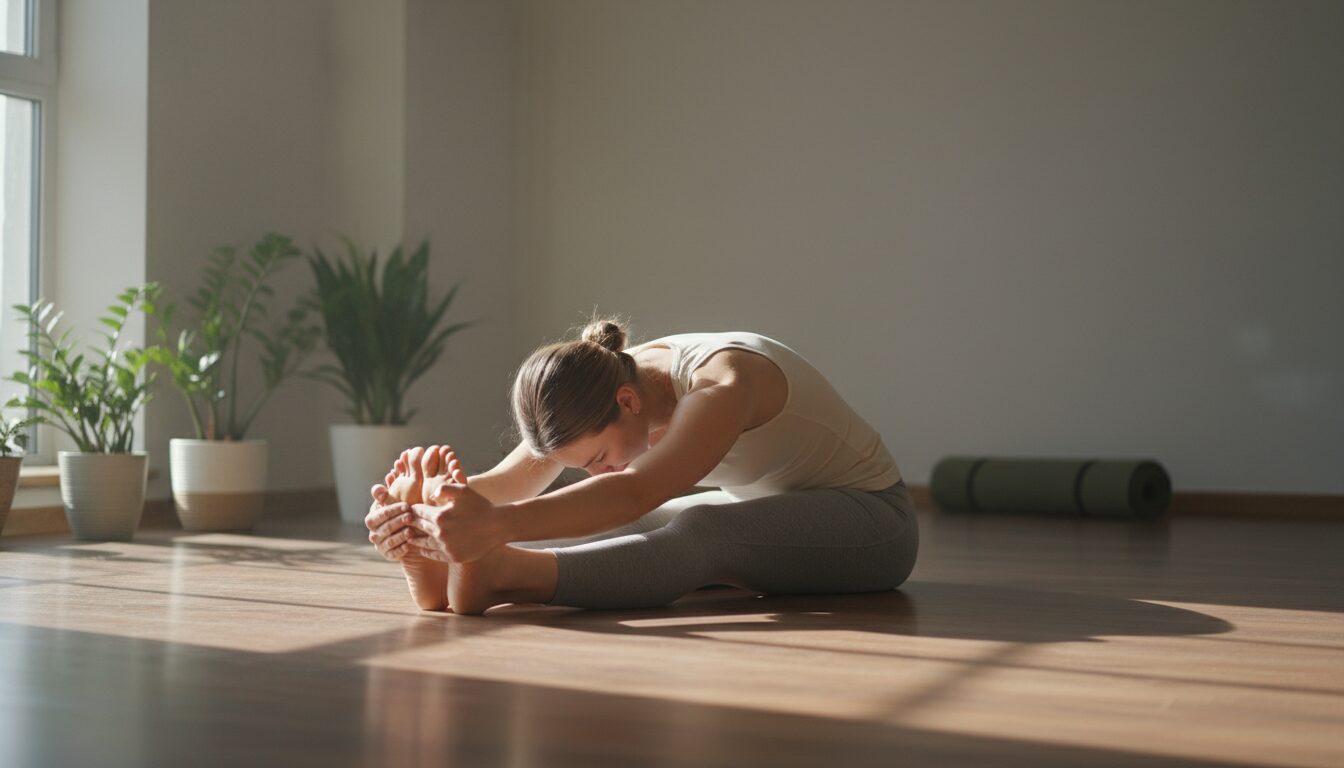
Forward folding poses naturally calm the nervous system by turning attention inward and slowing down the heart rate. Child’s Pose (Balasana), Standing Forward Fold (Uttanasana), and Seated Forward Fold (Paschimottanasana) are particularly effective for immediate stress relief.
Hip-opening poses like Pigeon Pose (Eka Pada Rajakapotasana) and Bound Angle Pose (Baddha Konasana) release stored tension in the hips, where emotional stress often accumulates. Hold these poses for 3-5 minutes while focusing on deep, slow breathing to maximize their calming effects.
Gentle Inversions and Twists
Gentle inversions like Legs-Up-the-Wall Pose (Viparita Karani) and Supported Shoulder Stand help regulate the nervous system by encouraging venous blood flow back to the heart. These poses activate the parasympathetic nervous system within minutes of practice.
Spinal twists such as Seated Spinal Twist (Ardha Matsyendrasana) and Supine Spinal Twist (Supta Matsyendrasana) help release tension along the spine while promoting detoxification. Practice twists slowly and mindfully, using the breath to deepen the pose gradually.
Restorative Poses for Deep Relaxation
Restorative yoga poses using props like bolsters, blankets, and blocks create the deepest level of relaxation by fully supporting the body. Supported Child’s Pose, Restorative Fish Pose, and Supported Savasana can be held for 10-20 minutes each.
These poses trigger the relaxation response more effectively than active poses because they eliminate muscular effort entirely. The extended hold times allow the nervous system to fully shift into repair and regeneration mode.
Breathing Techniques for Immediate Stress Relief
Pranayama (breathing techniques) offers the fastest way to activate stress relief because breath directly influences the autonomic nervous system. These techniques can be practiced anywhere and provide immediate results within 3-5 minutes.
Breathing exercises work by stimulating the vagus nerve, which sends signals to the brain to reduce stress hormone production. The key is making the exhale longer than the inhale, which activates the parasympathetic nervous system.
Box Breathing (Sama Vritti)
Box breathing involves equal counts for inhalation, retention, exhalation, and retention, creating a rhythm that balances the nervous system. Start with a 4-count pattern: inhale for 4, hold for 4, exhale for 4, hold for 4.
This technique is particularly effective during acute stress because it gives the mind a focal point while regulating heart rate variability. Practice for 5-10 minutes when feeling overwhelmed or anxious.
Extended Exhale Breathing
Making the exhale twice as long as the inhale maximally activates the relaxation response. Begin with inhaling for 4 counts and exhaling for 8 counts, adjusting the timing to your comfort level.
This technique works faster than other breathing methods because the extended exhale directly stimulates the vagus nerve. It’s especially helpful before sleep or during stressful situations at work.
Alternate Nostril Breathing (Nadi Shodhana)
Alternate nostril breathing balances the left and right hemispheres of the brain while calming the nervous system. Use your thumb to close the right nostril while inhaling through the left, then switch to close the left nostril while exhaling through the right.
This practice helps improve focus and mental clarity while reducing stress. It’s particularly beneficial when practiced in the morning or during breaks in the workday to reset mental energy.
Creating Your Personalized Yoga Routine
Effective stress management requires tailoring your yoga practice to your specific stress patterns, schedule, and physical needs. A personalized approach ensures consistency and maximizes the stress-reducing benefits.
The foundation of personalized practice involves understanding when you experience stress, what triggers it, and how your body responds. This awareness allows you to choose the most appropriate poses and techniques for different situations.
Assessing Your Stress Patterns
Identifying your stress patterns helps determine the optimal timing and type of yoga practice for maximum benefit. Keep a stress journal for one week, noting stress levels, triggers, physical symptoms, and times of day when stress peaks.
Common patterns include morning anxiety (best addressed with energizing poses), afternoon energy crashes (helped by gentle backbends), and evening tension (relieved through restorative poses). Understanding your patterns allows you to anticipate and prevent stress escalation.
Building Your Daily Practice Framework
A sustainable daily practice starts small and builds gradually, focusing on consistency over duration. Begin with 10-15 minutes daily, choosing 3-4 poses that address your primary stress symptoms.
Structure your practice with a warm-up (gentle movement), main practice (stress-specific poses), and relaxation (breathing or meditation). This framework ensures balanced nervous system activation and recovery.
Adapting for Time Constraints
Time-constrained routines focus on high-impact techniques that provide maximum stress relief in minimal time. A 5-minute practice might include Child’s Pose (2 minutes), Legs-Up-the-Wall (2 minutes), and extended exhale breathing (1 minute).
Office-friendly adaptations include seated spinal twists, desk-supported forward folds, and discreet breathing techniques. These can be practiced multiple times throughout the day to prevent stress accumulation.
Profession-Specific Yoga Strategies
Different professions create unique stress patterns that benefit from targeted yoga approaches. Understanding profession-specific stressors allows for more effective stress management strategies.
Professional stress often involves physical postures (like sitting or standing for long periods), emotional demands (such as patient care), or mental fatigue (from decision-making or problem-solving). Targeted yoga addresses these specific challenges.
Yoga for Teachers
Teachers face unique stressors including vocal strain, standing fatigue, and emotional demands from managing students. Effective poses include neck and shoulder releases, supported backbends to counter forward head posture, and grounding poses for emotional regulation.
Vocal warm-ups combined with breathing exercises help prevent voice strain, while hip flexor stretches counter prolonged standing. Quick stress-relief techniques can be practiced during prep periods or lunch breaks.
Strategies for Healthcare Workers
Healthcare workers experience high-stress environments with irregular schedules and emotional intensity. Practices should focus on rapid stress relief techniques that can be done between patients or during brief breaks.
Prioritize poses that counter physical demands like lifting and bending, such as gentle backbends and hip openers. Breathing techniques for emotional regulation become crucial when dealing with patient care stress. These practices naturally complement comprehensive preventive health strategies that healthcare workers need to maintain their own wellbeing.
Remote Employee Adaptations
Remote workers face prolonged sitting, screen time, and social isolation stressors. Chair-adapted poses, eye rest techniques, and movement breaks become essential components of stress management.
Desk yoga sequences should include spinal mobility, hip flexor stretches, and neck releases. Regular movement breaks prevent the accumulation of physical tension that contributes to stress.
Measuring Your Progress
Tracking progress in yoga stress management involves both subjective wellness indicators and objective health markers. Regular assessment helps maintain motivation and adjust practices for optimal results.
Progress measurement should include immediate effects (how you feel after practice), short-term changes (weekly patterns), and long-term improvements (monthly or quarterly assessments). This multi-level approach provides a complete picture of your stress management success.
Subjective Progress Indicators
Subjective measurements include stress level ratings, sleep quality, mood stability, and overall life satisfaction. Use a 1-10 scale to track these metrics weekly, looking for gradual improvements over time.
Additional subjective measures include reaction to stressful situations, ability to recover from stress, and general sense of wellbeing. These qualitative measures often show improvement before quantitative markers change.
Objective Measurements
Objective measurements might include resting heart rate, blood pressure, sleep tracking data, and stress hormone levels through testing. While not always accessible, these provide concrete evidence of physiological improvements.
Wearable devices can track heart rate variability, sleep patterns, and stress scores, providing daily feedback on your nervous system’s response to yoga practice. These objective measures help validate the subjective improvements you experience.
Creating Progress Milestones
Setting specific milestones maintains motivation and provides clear goals for your stress management journey. Examples include practicing yoga 5 days per week for a month, reducing average stress levels by 2 points, or improving sleep quality scores.
Celebrate small victories like completing your first week of consistent practice or successfully using breathing techniques during a stressful situation. These achievements build confidence and reinforce positive habits.
Combining Yoga with Other Stress Management Techniques
Integrating yoga with complementary stress management approaches creates a comprehensive wellness strategy that addresses multiple aspects of stress response. This multi-modal approach often provides better results than any single technique alone.
Effective combinations leverage the unique benefits of each approach while creating synergistic effects. For example, yoga’s physical benefits complement meditation’s mental training, while breathing techniques enhance the effectiveness of other relaxation methods.
Yoga and Meditation Integration
Combining asana practice with meditation creates a complete mind-body approach to stress management. Begin with gentle yoga to prepare the body, then transition into seated meditation for deeper mental relaxation.
This integration works because physical movement releases tension that might otherwise distract during meditation, while meditation enhances the mindfulness component of yoga practice. The combination addresses both physical and mental aspects of stress simultaneously.
Breathing Techniques and Aromatherapy
Pairing pranayama with aromatherapy enhances the relaxation response through multiple sensory channels. Essential oils for health benefits can amplify the calming effects of breathing exercises when used safely and appropriately.
Lavender, bergamot, and frankincense essential oils complement breathing practices by engaging the olfactory system’s direct connection to the brain’s emotional centers. This combination can deepen relaxation and create positive anchoring associations with stress relief.
Progressive Muscle Relaxation and Yoga
Combining yoga poses with progressive muscle relaxation techniques enhances body awareness and deepens physical release. Practice tensing and releasing muscle groups during restorative poses to maximize relaxation benefits.
This combination helps identify areas of chronic tension that might be missed in regular yoga practice while teaching the contrast between tension and relaxation. It’s particularly effective for people who carry stress in their muscles.
Addressing Stress-Related Physical Symptoms
Chronic stress manifests in specific physical symptoms that can be directly addressed through targeted yoga practices. Understanding the connection between stress and physical symptoms allows for more effective, focused interventions.
Stress commonly affects the head and neck (tension headaches), digestive system (stomach issues), and musculoskeletal system (tight shoulders and back). Targeted yoga addresses these symptoms at their source while providing immediate relief.
Poses for Tension Headaches
Tension headaches often result from neck and shoulder tightness, which responds well to gentle neck releases and supported forward folds. Cat-Cow stretches, gentle neck rotations, and supported Child’s Pose can provide immediate relief.
Focus on releasing the suboccipital muscles at the base of the skull through gentle traction poses like supported Fish Pose or using a tennis ball for trigger point release. Combining these with breathing exercises addresses both muscular tension and stress triggers.
Digestive Issues and Yoga
Stress significantly impacts digestion through the gut-brain connection, making yoga an effective tool for stress-related digestive problems. Gentle twists, supported forward folds, and specific breathing techniques help restore digestive function.
Poses like Wind-Relieving Pose (Pavanamuktasana), gentle supine twists, and diaphragmatic breathing massage the abdominal organs and activate the parasympathetic nervous system, which controls digestion. For comprehensive digestive support, these practices work well alongside evidence-based natural digestive remedies.
Muscular Tension Relief
Chronic stress creates patterns of muscular tension that require specific poses to release effectively. Common tension areas include the shoulders, hip flexors, and jaw, each requiring targeted approaches.
Shoulder tension responds to poses like Eagle Arms, supported Chest Opening, and gentle side stretches. Hip flexor tightness from prolonged sitting benefits from low lunges, Pigeon Pose variations, and hip circles. Jaw tension can be addressed through gentle jaw massage combined with Lion’s Breath.
Building Long-Term Stress Resilience
Long-term stress resilience requires moving beyond reactive stress management to proactive stress prevention and emotional regulation skills. This involves building a sustainable practice that evolves with your changing needs and life circumstances.
Resilience building focuses on developing the ability to recover quickly from stress, maintain emotional balance during challenging periods, and prevent stress from accumulating to unhealthy levels. Yoga provides tools for all these aspects when practiced consistently over time.
Establishing Consistency
Consistency matters more than intensity for long-term stress resilience. A regular 15-minute daily practice provides better results than sporadic longer sessions because it maintains nervous system balance and prevents stress accumulation.
Create consistency through habit stacking (connecting yoga to existing routines), environmental cues (keeping your mat visible), and flexible timing (having both morning and evening options). Track your practice to identify patterns and obstacles to consistency.
Progressive Challenge and Adaptation
Building resilience requires gradually challenging your comfort zone while maintaining safety and mindfulness. This might involve holding poses longer, trying more advanced breathing techniques, or practicing during stressful periods.
Progression should be slow and mindful, focusing on deepening awareness rather than achieving advanced poses. The goal is building confidence in your ability to self-regulate and manage stress through movement and breath.
Integration with Daily Life
True stress resilience comes from integrating yoga principles into daily activities, not just formal practice time. This includes using breathing techniques during stressful moments, applying mindfulness to routine tasks, and maintaining body awareness throughout the day.
Practice brief centering moments between activities, use conscious breathing during commutes, and apply yoga’s mindfulness principles to challenging conversations or situations. This integration creates a continuous foundation of stress resilience.
Yoga for Stress Management Resources
Building expertise in yoga stress management requires ongoing learning and access to quality resources. The field continues evolving with new research and techniques, making continued education valuable for optimizing your practice.
Quality resources provide evidence-based information, safe practice guidelines, and progressive learning paths that support both beginners and experienced practitioners. They also offer community support and professional guidance when needed.
Educational Materials and References
Reputable educational materials include peer-reviewed research, certified instructor guidance, and established yoga therapy resources. Look for materials that cite scientific studies and provide clear safety guidelines.
Recommended resources include the International Association of Yoga Therapists (IAYT), research publications in complementary medicine journals, and books by certified yoga therapists. Online platforms should be evaluated for instructor credentials and evidence-based content.
Academic and Professional Development
Professional development opportunities include teacher training programs, continuing education workshops, and specialized certifications in yoga therapy or stress management. These provide deeper understanding and enhanced skills for personal or professional use.
Look for programs accredited by Yoga Alliance or IAYT that include anatomy, physiology, psychology, and practical application components. Many programs offer specialized focus on stress management, trauma-informed yoga, or therapeutic applications.
Building Your Knowledge Base
A strong knowledge base combines theoretical understanding with practical experience and ongoing learning. This includes understanding the science behind yoga’s effects, safety considerations, and adaptation strategies for different needs.
Stay updated through reputable websites, podcasts by qualified instructors, and participation in workshops or online courses. Document your learning and experiences to track your growing expertise and identify areas for further development.
Your Questions Answered
How quickly does yoga reduce stress levels?
Immediate stress relief can occur within 10-15 minutes of yoga practice, with measurable physiological changes beginning almost immediately. Heart rate and blood pressure typically decrease within the first few minutes of gentle poses and breathing exercises.
Longer-term benefits, such as improved stress resilience and reduced baseline cortisol levels, typically develop over 4-8 weeks of consistent practice. Most people notice significant improvements in their stress response patterns within the first month of regular practice.
Can yoga replace other stress management treatments?
While yoga is highly effective for stress management, it works best as part of a comprehensive approach rather than a complete replacement for other treatments. For severe stress, anxiety, or depression, professional counseling or medical treatment may be necessary alongside yoga practice.
Yoga effectively complements therapy, medication, and other stress management techniques. It’s particularly valuable for developing self-regulation skills and providing daily stress prevention tools that support other treatments.
What time of day works best for stress-relief yoga?
The optimal time depends on your stress patterns and schedule, with both morning and evening practices offering unique benefits. Morning yoga helps prevent stress accumulation throughout the day and sets a calm tone, while evening practice helps process daily stress and improves sleep quality.
Many people benefit from brief morning energizing sequences (10-15 minutes) combined with longer evening relaxation practices (20-30 minutes). Experiment with different timing to find what works best for your lifestyle and stress patterns.
How long should stress-relief yoga sessions last?
Effective stress-relief sessions can range from 5 minutes for acute stress management to 45-60 minutes for comprehensive practice. The key is matching session length to available time and stress levels rather than adhering to arbitrary durations.
For daily practice, 15-20 minutes provides substantial benefits while remaining sustainable for most people. During high-stress periods, even 5-minute breathing or gentle movement breaks can provide meaningful relief and prevent stress escalation.
Do I need special equipment for yoga stress management?
Basic stress-relief yoga requires no special equipment, though simple props can enhance comfort and effectiveness. A yoga mat provides stability and defines your practice space, while a blanket and pillow can support restorative poses.
Optional props that enhance stress-relief practice include bolsters for supported poses, blocks for seated positions, and straps for gentle stretching. However, household items like pillows, towels, and books can substitute for formal props effectively.
Can beginners safely practice yoga for stress relief?
Yoga stress management is particularly suitable for beginners because it emphasizes gentle poses, mindful breathing, and relaxation over advanced physical postures. The focus on stress relief naturally leads to safer, more accessible practices.
Beginners should start with basic poses, focus on proper breathing, and listen to their body’s signals. Avoid forcing poses or practicing through pain, and consider starting with guided classes or videos designed for beginners and stress relief.
How does yoga compare to other stress management methods?
Yoga offers unique advantages by simultaneously addressing physical, mental, and emotional aspects of stress through one integrated practice. Unlike some stress management methods that focus on single aspects, yoga provides comprehensive benefits including improved flexibility, strength, breathing, and mindfulness.
Research shows yoga to be as effective as other evidence-based stress management techniques, with the additional benefits of improved physical health, better sleep, and enhanced body awareness. It complements rather than replaces other effective methods like counseling, meditation, or exercise.