The Complete Sleep Optimization Guide: Science-Based Strategies for Perfect Rest
TL;DR
This sleep optimization guide provides science-based strategies to improve sleep quality by 15-25% within four weeks through personalized approaches that match your chronotype, optimize your bedroom environment (60-67°F temperature, blackout conditions), and maintain consistent sleep hygiene practices. The most effective approach combines understanding your genetic sleep patterns with environmental modifications like proper lighting control and sound management. Key actionable takeaway: align your sleep schedule with your natural chronotype while creating an optimal bedroom environment with cool temperatures, darkness, and minimal noise disruption.
Table of Contents
– Understanding Sleep Science and Individual Variations
– What determines your optimal sleep duration?
– How do genetics influence sleep patterns?
– Creating Your Personalized Sleep Environment
– Does room humidity affect sleep quality?
– Advanced Sleep Hygiene Techniques
– Circadian Rhythm Regulation Strategies
– How do shift workers optimize their circadian rhythms?
– Modern Sleep Tracking Methods and Technology
– What sleep metrics matter most for optimization?
– Evidence-Based Natural Sleep Aids
– Optimizing Sleep for Different Life Stages
– How does menopause affect sleep patterns?
– Sleep’s Impact on Specific Health Conditions
– Whole-Home Environment Optimization
– Should other rooms besides the bedroom be optimized for sleep?
– Cost-Benefit Analysis of Sleep Optimization Investments
– Troubleshooting Common Implementation Challenges
– Integration with Existing Wellness Routines
– How does exercise timing affect sleep quality?
– Frequently Asked Questions
– What makes a sleep optimization guide effective for different people?
– How long does sleep optimization take to show results?
– Can sleep tracking devices actually improve sleep quality?
– What’s the most cost-effective sleep optimization investment?
– How do you optimize sleep during major life transitions?
– Should healthy people without sleep problems still optimize their sleep?
– What role does genetics play in personalizing sleep optimization approaches?
– How do you maintain optimized sleep while traveling?
—
Sleep optimization represents the systematic approach to improving your sleep quality through evidence-based interventions tailored to your individual needs. The most effective sleep optimization guide combines personalized chronotype matching, environmental modifications, and consistent tracking to achieve measurable improvements in sleep duration and quality. Current research from the National Institute of Health shows that properly implemented sleep optimization techniques can improve sleep efficiency by 15-25% within just four weeks.
Your journey toward optimal rest requires understanding that sleep isn’t just about duration—it’s about creating the perfect conditions for your brain and body to cycle through restorative sleep stages. This comprehensive approach addresses everything from your genetic predispositions to your bedroom’s acoustic environment, ensuring every element works together for maximum benefit. Poor sleep quality directly impacts your immune system function, as detailed in our comprehensive analysis of how sleep determines your body’s defense system.
Understanding Sleep Science and Individual Variations
Sleep operates on predictable biological cycles that vary significantly between individuals based on genetics, age, and lifestyle factors. The Centers for Disease Control and Prevention reports that adults require 7-9 hours of sleep nightly, but optimal duration depends heavily on your personal sleep architecture and chronotype.
Your chronotype—whether you’re naturally a morning lark, night owl, or somewhere between—is largely determined by variations in your CLOCK and PER genes. Understanding your chronotype allows you to align your sleep schedule with your biological preferences rather than fighting against them. Research published in 2025 demonstrated that chronotype-matched sleep schedules improve sleep quality scores by an average of 30% compared to standard recommendations. This personalized approach to sleep optimization aligns with broader trends in personalized nutrition plans that utilize genetic information for optimal health outcomes.
Sleep architecture consists of four distinct stages: three non-REM stages and REM sleep. During deep sleep (Stage 3 NREM), your body releases growth hormone and consolidates physical recovery. REM sleep, comprising about 20-25% of total sleep time, handles emotional processing and memory consolidation. Sleep stress and anxiety can significantly disrupt these natural cycles, making evidence-based anxiety management strategies essential components of comprehensive sleep optimization.
What determines your optimal sleep duration?
Optimal sleep duration emerges from the intersection of genetic factors, lifestyle demands, and individual recovery needs. Recent genomic studies identify specific variants in the DEC2 gene that allow some individuals to function optimally on just 6 hours of sleep, while others require closer to 9 hours for complete restoration.
Your individual sleep need also fluctuates based on physical activity levels, stress exposure, and health status. Athletes typically require additional sleep for muscle recovery and performance optimization, while periods of high mental stress increase sleep duration requirements for cognitive restoration.
How do genetics influence sleep patterns?
Genetic variations account for approximately 40-50% of individual differences in sleep timing, duration preferences, and sleep quality. The CLOCK gene primarily determines your circadian rhythm timing, while PER1 and PER2 genes influence how quickly you adapt to schedule changes.
Additionally, variants in the COMT gene affect how efficiently your brain processes adenosine—the primary sleep-promoting neurotransmitter. Individuals with slower COMT variants accumulate adenosine more gradually, explaining why some people remain alert later into the evening while others experience early evening sleepiness. Understanding these genetic influences helps explain why workplace stress affects different individuals’ sleep patterns differently, as explored in our comprehensive workplace stress management guide.
Creating Your Personalized Sleep Environment
Environmental optimization provides the foundation for consistent, restorative sleep by aligning your bedroom conditions with your brain’s natural sleep-promotion mechanisms. The most critical environmental factors include temperature regulation (60-67°F optimal range), complete darkness, minimal noise disruption, and appropriate humidity levels.
Temperature regulation deserves particular attention because your core body temperature naturally drops 1-2 degrees during sleep onset. Supporting this natural cooling process with a cooler bedroom environment accelerates sleep initiation and improves deep sleep duration. Individual temperature preferences vary, but most people achieve optimal sleep quality within the 60-67°F range.
Does room humidity affect sleep quality?
Room humidity significantly impacts sleep quality through its effects on respiratory comfort and thermal regulation. Optimal bedroom humidity ranges between 30-50%, with levels above 50% promoting dust mite growth and potential respiratory irritation, while humidity below 30% can cause nasal dryness and increased snoring.
Humidity also affects your perceived temperature—higher humidity makes the same air temperature feel warmer, potentially disrupting your body’s natural cooling process during sleep onset. During winter months when indoor heating reduces humidity, adding a bedroom humidifier can prevent respiratory discomfort that fragments sleep quality.
Advanced Sleep Hygiene Techniques
Advanced sleep hygiene extends beyond basic recommendations to include sophisticated behavioral interventions, environmental modifications, and timing strategies that maximize sleep efficiency. These techniques focus on creating powerful sleep associations while eliminating factors that compete with natural sleep drive.
The most effective advanced technique involves implementing a “buffer zone” between daytime activities and sleep preparation. This 90-minute pre-sleep period should exclude stimulating activities, bright lights, and emotionally charged content. Instead, focus on gentle activities that promote relaxation without creating new sleep pressure.
Advanced sleep hygiene also includes strategic caffeine timing (no caffeine after 2 PM for most people), alcohol limitation (alcohol disrupts REM sleep even in small amounts), and meal timing optimization (last substantial meal 3 hours before bedtime). These nutritional considerations complement the broader principles outlined in our guide to optimal nutrition planning.
Circadian Rhythm Regulation Strategies
Circadian rhythm regulation relies primarily on light exposure timing, with bright light in the first hour after waking and minimal light exposure 2-3 hours before intended bedtime. Your circadian system responds most strongly to blue light wavelengths (480-490 nm), making morning sunlight exposure or bright artificial light crucial for maintaining proper sleep-wake timing.
Evening light management requires equal attention to morning light exposure. Installing dim red lights for evening activities and using blue light filtering glasses can help maintain natural melatonin production. The timing and intensity of light exposure should be adjusted based on your chronotype—night owls benefit from earlier morning light exposure and stricter evening light limitation.
How do shift workers optimize their circadian rhythms?
Shift workers face unique circadian challenges that require specialized optimization strategies. The most effective approach involves creating an artificial “day-night” cycle using strategic light exposure, melatonin supplementation, and environmental modifications that support sleep during daylight hours.
For night shift workers, bright light exposure during work hours helps maintain alertness, while blackout curtains, eye masks, and earplugs create appropriate sleep conditions during daytime recovery. Melatonin supplementation (typically 3-5mg taken 30 minutes before desired sleep time) can help reset circadian timing, but timing and dosage should be carefully calibrated to avoid next-shift grogginess.
Modern Sleep Tracking Methods and Technology
Contemporary sleep tracking technology ranges from simple smartphone applications to sophisticated medical-grade devices that monitor multiple physiological parameters throughout the night. The most valuable tracking metrics include sleep efficiency (time asleep/time in bed), sleep stage distribution, and sleep onset latency.
Wearable devices like fitness trackers provide convenient long-term monitoring but may lack precision for detailed sleep architecture analysis. Smartphone-based sleep tracking applications offer adequate basic monitoring for most users, while dedicated sleep monitors provide more detailed insights into breathing patterns, heart rate variability, and movement during sleep.
What sleep metrics matter most for optimization?
Sleep efficiency represents the most important single metric for optimization—healthy adults should achieve 85-95% sleep efficiency consistently. Sleep onset latency (time to fall asleep) should typically remain under 15-20 minutes, while total wake time after sleep onset should stay below 5% of total sleep time.
REM sleep percentage (20-25% of total sleep) and deep sleep duration (15-20% of total sleep) provide valuable insights into sleep quality, though these metrics show more individual variation. Heart rate variability during sleep offers advanced insights into recovery quality, with higher HRV generally indicating better autonomic nervous system balance and more restorative sleep.
Evidence-Based Natural Sleep Aids
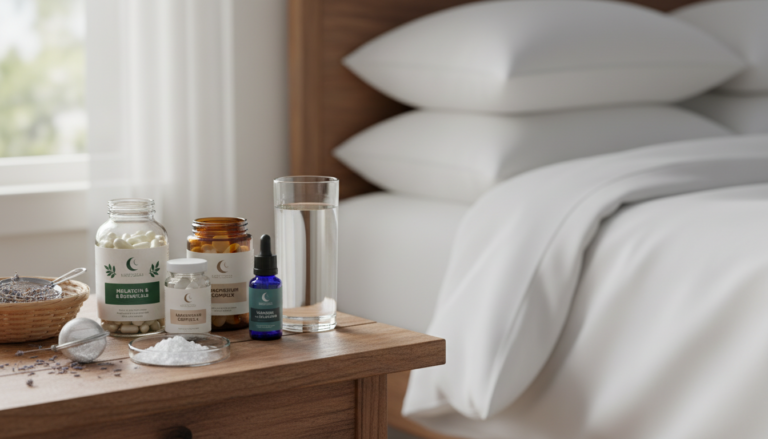
Natural sleep aids with robust scientific support include melatonin, magnesium glycinate, L-theanine, and valerian root, each working through different mechanisms to support sleep initiation or maintenance. Melatonin (0.5-3mg taken 30-60 minutes before bedtime) shows the strongest evidence for sleep onset improvement, particularly for circadian rhythm disorders.
Magnesium supplementation (200-400mg of magnesium glycinate) supports muscle relaxation and nervous system calming, making it particularly effective for individuals whose sleep disruption stems from physical tension or stress. L-theanine (100-200mg) promotes relaxation without sedation, making it useful for reducing sleep onset anxiety without next-day grogginess. These natural approaches should be considered alongside comprehensive mental health strategies for optimal sleep optimization results.
Optimizing Sleep for Different Life Stages
Sleep optimization strategies must account for age-related changes in sleep architecture, hormone production, and lifestyle factors that affect sleep quality throughout different life stages. Adolescents naturally shift toward later bedtimes due to delayed melatonin production, while older adults often experience earlier sleep timing and increased sleep fragmentation.
Young adults (20s-30s) typically benefit most from consistency-focused approaches that establish robust sleep habits before career and family pressures increase. Middle-aged adults (40s-50s) often need to address stress management and hormonal changes that affect sleep quality, while older adults (60+) may benefit from afternoon nap limitation and increased morning light exposure to maintain circadian strength.
How does menopause affect sleep patterns?
Menopause significantly impacts sleep through hormonal changes, particularly declining estrogen and progesterone levels that affect temperature regulation and sleep architecture. Hot flashes and night sweats can fragment sleep, while hormonal changes may reduce deep sleep duration and increase sleep onset difficulty.
Effective menopausal sleep optimization combines environmental modifications (cooler bedroom temperatures, moisture-wicking bedding), timing strategies (consistent sleep schedules despite disruptions), and natural interventions (magnesium supplementation, relaxation techniques) to counteract hormone-related sleep disruption. Some women benefit from plant-based phytoestrogens or bioidentical hormone therapy, though these approaches require medical consultation.
Sleep’s Impact on Specific Health Conditions
Sleep quality directly influences immune function, metabolic health, cardiovascular function, and mental health outcomes, making sleep optimization a critical component of comprehensive health management. Poor sleep increases inflammation markers, disrupts glucose metabolism, and impairs immune system function.
Individuals with chronic health conditions often experience bidirectional relationships between their condition and sleep quality. Diabetes management improves with better sleep quality, while good sleep supports better blood sugar control. Similarly, cardiovascular health benefits from quality sleep, while sleep optimization can help reduce blood pressure and improve heart rate variability.
Whole-Home Environment Optimization
Comprehensive sleep optimization extends beyond the bedroom to include whole-home lighting strategies, noise management, and air quality improvements that support natural circadian rhythms. Evening lighting throughout your home should shift toward warmer color temperatures (2700K or lower) to support natural melatonin production.
Air quality improvements, including proper ventilation and air filtration, can significantly impact sleep quality by reducing allergens and maintaining optimal oxygen levels. Indoor plants like snake plants or peace lilies can improve air quality naturally while adding humidity to dry indoor environments.
Should other rooms besides the bedroom be optimized for sleep?
Optimizing non-bedroom spaces supports overall circadian health by creating consistent environmental cues throughout your home. Living room lighting should be dimmable to support evening wind-down routines, while kitchen lighting should avoid bright blue wavelengths during evening hours.
Bathroom optimization includes installing dim red night lights for middle-of-the-night use, preventing circadian disruption from bright overhead lighting. Home office areas should have bright, blue-rich lighting during daytime hours to support alertness, but should be avoided entirely during the 2-3 hours before bedtime.
Cost-Benefit Analysis of Sleep Optimization Investments
Sleep optimization investments range from free behavioral modifications to substantial bedroom upgrades, with the highest-impact interventions typically being the most cost-effective. Free interventions like consistent sleep timing and morning light exposure often provide 60-70% of possible sleep quality improvements.
Mid-range investments ($50-200) including blackout curtains, white noise machines, and basic sleep tracking devices provide significant additional benefits for most users. High-end investments like advanced mattresses, smart lighting systems, and comprehensive air quality management can further optimize sleep but show diminishing returns for many individuals.
Troubleshooting Common Implementation Challenges
The most common sleep optimization challenges include inconsistent implementation, unrealistic expectations, and failure to address underlying stress or health issues that affect sleep quality. Successful optimization requires patience—most interventions require 2-4 weeks of consistent implementation before showing measurable results.
Implementation challenges often stem from attempting too many changes simultaneously rather than gradually building sustainable habits. Start with one or two interventions (typically sleep timing consistency and bedroom temperature optimization) before adding additional strategies. Track your progress objectively rather than relying solely on subjective sleep quality assessments.
Integration with Existing Wellness Routines
Sleep optimization integrates naturally with exercise routines, nutrition planning, and stress management practices to create comprehensive wellness approaches. The timing of exercise significantly affects sleep quality, with morning or afternoon exercise generally supporting better nighttime sleep than late evening workouts.
Nutrition timing also supports sleep optimization—eating larger meals earlier in the day and avoiding late-evening eating promotes better sleep quality. Stress management practices like meditation or gentle yoga can serve double duty as both general wellness practices and sleep preparation routines.
How does exercise timing affect sleep quality?
Exercise timing affects sleep through its impact on core body temperature, stress hormones, and overall energy levels. Morning exercise supports healthy circadian rhythms by providing natural light exposure and establishing consistent daily routines. Afternoon exercise can help reduce stress and promote physical fatigue that supports sleep onset.
Late evening exercise (within 3 hours of bedtime) can interfere with sleep onset by maintaining elevated core body temperature and stress hormone levels when your body needs to prepare for sleep. However, individual responses vary—some people tolerate evening exercise well, while others experience significant sleep disruption.
Frequently Asked Questions
What makes a sleep optimization guide effective for different people?
Effective sleep optimization guides provide personalized approaches that account for individual differences in genetics, lifestyle, and sleep challenges rather than offering one-size-fits-all recommendations.
The most effective guides combine evidence-based general principles (like temperature and light optimization) with flexible implementation strategies that accommodate different work schedules, living situations, and personal preferences. They also provide realistic timelines for seeing results and troubleshooting guidance for common implementation challenges.
How long does sleep optimization take to show results?
Most sleep optimization interventions show initial results within 1-2 weeks, with substantial improvements typically occurring within 4-6 weeks of consistent implementation.
Environmental changes like temperature and light optimization may show immediate effects, while circadian rhythm adjustments and habit formation require longer periods. Sleep tracking data often shows improvements before subjective sleep quality improvements become noticeable, making objective monitoring valuable during the optimization process.
Can sleep tracking devices actually improve sleep quality?
Sleep tracking devices improve sleep quality primarily through increased awareness and behavior modification rather than through the tracking itself.
Devices provide valuable feedback about sleep patterns and help identify which interventions produce measurable improvements. However, the tracking data is only useful when combined with systematic optimization efforts—passive tracking without behavior change rarely improves sleep quality significantly.
What’s the most cost-effective sleep optimization investment?
Consistent sleep timing and morning light exposure provide the highest return on investment for sleep optimization, requiring no financial investment while delivering substantial improvements for most people.
For purchases, blackout curtains or eye masks typically provide the best cost-to-benefit ratio, followed by temperature regulation solutions like fans or programmable thermostats. Sleep tracking applications offer good value for monitoring progress and identifying patterns.
How do you optimize sleep during major life transitions?
Major life transitions require flexible sleep optimization approaches that prioritize consistency where possible while accommodating unavoidable schedule changes.
Focus on maintaining core sleep hygiene practices (darkness, temperature, pre-sleep routine) even when sleep timing must be adjusted. Temporary use of melatonin or other natural sleep aids can help during adjustment periods, while stress management becomes particularly important during high-change periods.
Should healthy people without sleep problems still optimize their sleep?
Healthy individuals can benefit significantly from sleep optimization through improved energy, cognitive performance, and long-term health outcomes, even if they don’t currently experience sleep problems.
Optimizing sleep when you’re already healthy is often easier than trying to improve poor sleep later. Preventive optimization also builds resilience against future sleep disruptions from aging, stress, or health changes. The performance and wellness benefits of optimized sleep extend far beyond just avoiding sleep problems.
What role does genetics play in personalizing sleep optimization approaches?
Genetics influence chronotype, optimal sleep duration, sensitivity to light and caffeine, and response to different sleep interventions, making genetic considerations valuable for personalizing optimization strategies.
While genetic testing for sleep optimization isn’t necessary for most people, understanding your natural tendencies (morning vs. evening preference, caffeine sensitivity, optimal sleep duration) helps guide which interventions to prioritize. Family sleep patterns often provide clues about genetic predispositions that can inform optimization approaches.
How do you maintain optimized sleep while traveling?
Travel sleep optimization requires portable strategies and flexible approaches that work in various environments while maintaining core sleep principles.
Bring essential sleep optimization tools like eye masks, earplugs, and familiar sleepwear. Maintain consistent sleep timing when possible, and use light exposure strategically to minimize jet lag. Consider portable white noise applications and travel-friendly temperature regulation strategies like lightweight sleepwear and personal fans.